What works for everyone
Pick a format where every person has a role and nobody performs alone. The competition should belong to the team, the work inside the team should be split into jobs, and nobody should be picked out in front of the room.
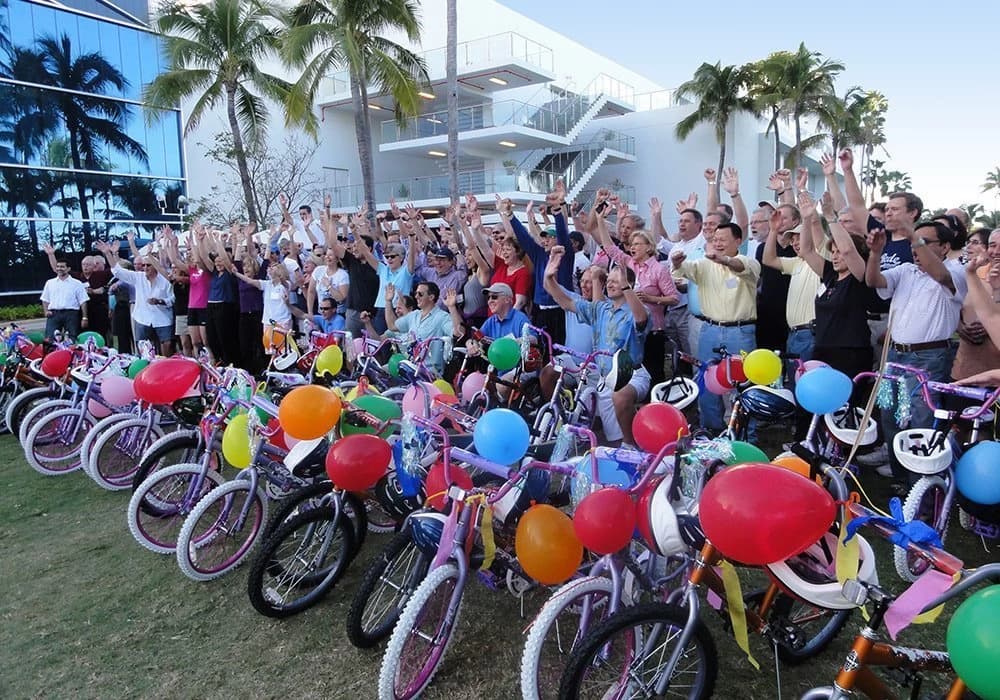
Planners often ask whether one program can satisfy the people who live for a scoreboard and the people who dread forced fun. It can, and the trick is where the competition sits. In a Bike Build Donation®, teams of ten compete in trivia, puzzles and photo challenges to earn points, then spend those points at an on-site bike shop. The competitors get their leaderboard. Everyone else gets a bike to build, and every team's bike goes to the same donation.
The same structure helps the quiet half of the room. The Myers-Briggs Company puts introverts at more than half the population, and our guide to icebreakers spells out what that means for design: introverts are fine with structure and uncomfortable with exposure. A job at a table of eight works. A spotlight in front of forty people does not.
Then there is ability. The CDC counts more than one in four U.S. adults as having some type of disability, including mobility (12.2 percent), hearing (6.2 percent) and vision (5.5 percent). Those figures cover all adults, so a workforce runs lower. Even so, in a group of a hundred it is safer to assume someone needs a ramp, a seat or a clear view of the screen than to assume nobody does. That is why every program page states its physicality, and why about four in five of our in-person programs are rated low.
And trust falls? Our guide to why team building works leaves them out of the definition altogether. What replaces them is a shared task with a visible result: a bike, a bear, a race car, a score on the board.
How to pick by need
Start from the people in the group, then match the format. Each row below names programs from our catalog and the feature of the program that makes it fit.
Most groups have more than one of these needs at once, so look for the program that appears in more than one row. A charitable build covers the competitors, the non-competitors and most mobility needs in a single afternoon, which is why our large-group guide recommends it for most large groups.
Physicality ratings come from each program's own page, where Low, Medium and High describe how much moving the program asks of a participant. Times and team sizes are from the same pages.
| If your group has | Formats that fit | Why it fits | Length and physicality |
|---|---|---|---|
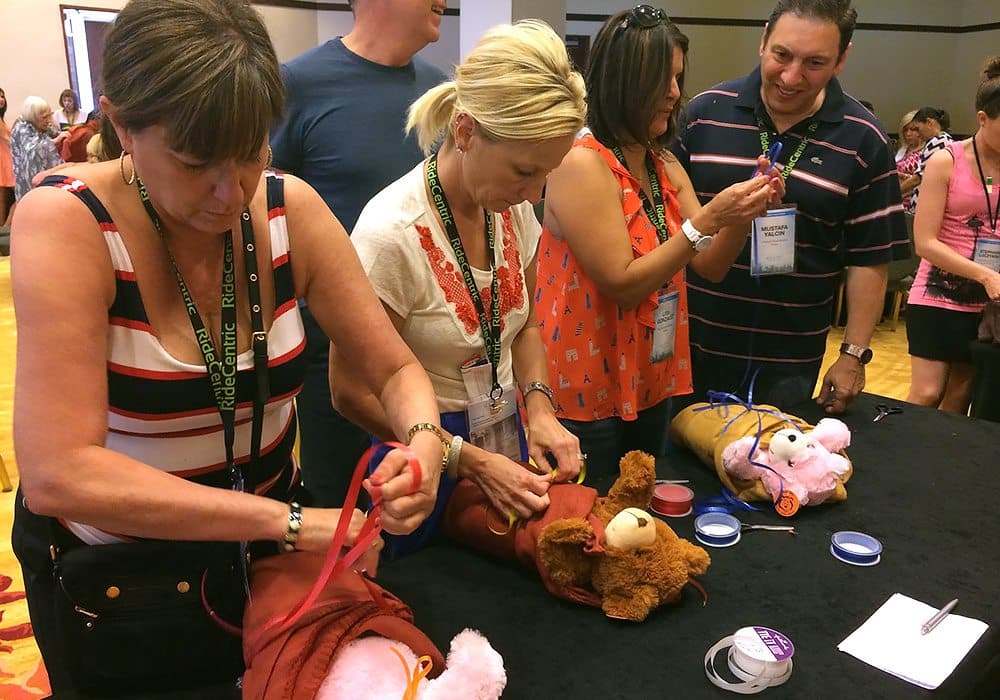
| Competitors and non-competitors | Bike Build Donation, Bears and Blankets, Competition to Collaboration | Teams compete to earn parts, then every team's build goes to one donation. Competition to Collaboration turns two rival rooms into teams measured by how much they help each other. | 1 to 2 hours, low (builds); 2.5 to 3 hours, medium (Competition to Collaboration) |
| Introverts and people who hate the spotlight | Total Recall, Match Me If You Can, Trivia Blast Live! | Total Recall gives each of five people a role they choose. Match Me puts three contestants on stage, picked in advance if you like, while teams answer from their tables. Trivia Blast is played on phones as answer pads. | 1 to 2 hours, low |
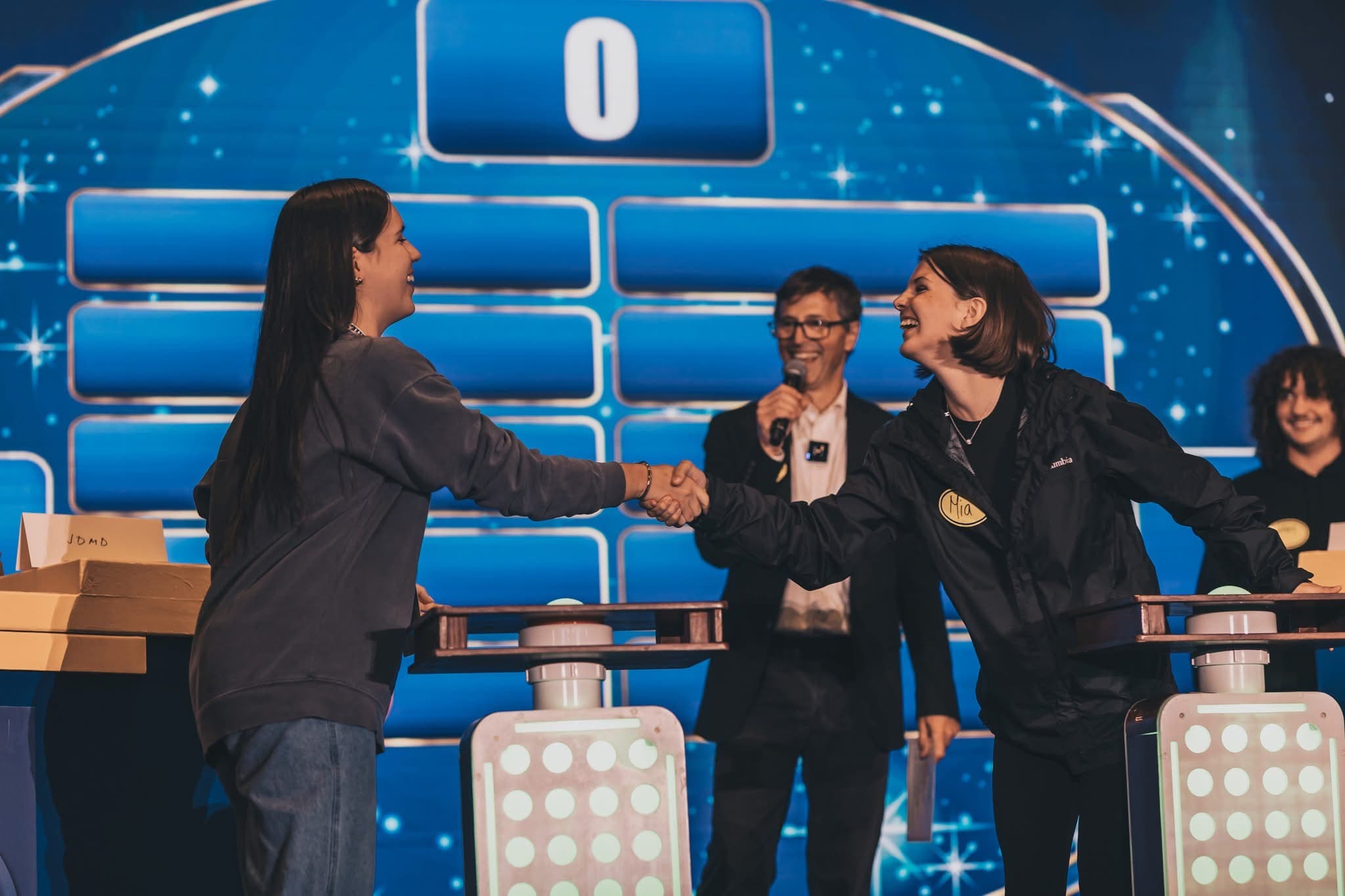
| Limited mobility or a seated group | Trivia Blast Live!, Best Corporate Feud, Bears and Blankets | Played or built at the table. In Feud, seated teams stay in the game through All Play questions while captains face off at the podium. | 1 to 1.5 hours, low |
| Mixed skill levels and ages | A Minute 2 Win It!, Bike Build Donation, Race Car Rally | Every Minute 2 Win It challenge runs as a demo, a practice round, then a timed round. The bike build needs no mechanical experience. Race Car Rally has jobs for decorators, builders, chant leaders and pit crew strategists. | 1.5 to 2 hours, low |
| A group that wants to move | Team Olympics, City SmartHunt | Both are rated high. Team Olympics runs on Challenge by Choice, so each person sets their own level of physical participation. | 1.5 to 2.5 hours, high |
| Teammates joining remotely | A hybrid game show, Hybrid Build-a-Rollator, the virtual escape rooms | One scoreboard for both audiences. In the hybrid rollator build, remote teams answer trivia to earn the rollators that staff in the room assemble and donate. | Escape rooms 1 to 1.5 hours; all low |
How a host keeps everyone in the game
The program design does most of the work: roles inside each team, a practice round before anything counts, and a choice about how hard to push. The host's job is to protect those choices on the day.
Roles come first. In Total Recall, the sub-teams of five pick their own jobs from written descriptions: one looker who can see the original model, a buyer who negotiates for materials, two runners and a builder. In Catapult, teams rotate through roles during the launch round so that everyone takes a turn. Bridge to the Future splits each team into cardboard cutters, column designers, decorators and builders. A person who would rather stay quiet can cut cardboard, and a person who wants to lead can run the meeting with the other team leaders.
Practice before points. A Minute 2 Win It! demonstrates every challenge, gives each team a practice round, and only then starts the clock, which is how a sixty-second pencil-flipping game stays fun for the intern and the CEO alike. The bike build works the same way, with facilitators walking each team through the build step by step.
Choice about effort. Team Olympics is rated high physicality, and it runs on what the program page calls Challenge by Choice: each person decides their own level of physical participation without missing out on the fun. Adjusting the intensity of the challenges to the group is one of its standard customizations, and other programs, Go-Kart Competition among them, can be modified for the makeup of the group.
And nobody gets picked out. Our facilitators open most events with an icebreaker, and the rule from the icebreaker guide applies all afternoon: pairs before tables, tables before the room, and a job for the quiet person in place of a question in front of everyone. In Jeoparody Live!, each team nominates its own representative for the podium, so the spotlight goes to the person who wants it.
A note on hearing and vision
Remote teammates
Put remote people on a team with a way to act, a way to score and a way to be seen. Streaming the room to them makes them an audience.
Our guide to remote and hybrid team building covers this in detail. The short version is one scoreboard for everyone, a host responsible for the room and a facilitator responsible for the screen, and remote joiners placed on in-room teams and named out loud when they score. Charitable programs hybridize well because the physical work stays in the room while the scoring can happen anywhere.
The programs that hybridize badly are the ones whose whole content is physical, such as Bridge to the Future or a culinary build, where a remote joiner would have nothing to do but watch. If most of the team is remote, a fully virtual program is often the fairer choice: the virtual escape rooms run in a browser in teams of four to six, and Saving Santa is written for groups of all ages and skill levels.
What to ask before the day
Ask the group what would keep anyone from taking part, check the venue against the answers, and tell us both at booking.
Our planning guide includes a short survey question for exactly this: is there anything that would keep you from taking part? Ask it early, and ask it in a way people can answer privately. The answers decide the format more than the budget does.
Then check the room. We run programs at your office, hotel or venue, and the venue and the food stay with you, so step-free access, elevators, accessible restrooms and seating for anyone who needs it are worth confirming with the venue before the contract is signed. For a game show, ask whether the stage has step-free access, or whether play can come to the tables instead.
Finally, tell us what you learned. A program manager who knows the room has a wheelchair user, a third of the team on video and a sales team that will want a leaderboard can choose and set up the program around all three. Cost and planning have guides of their own: what team building costs, and how to plan a team building event.
- A private question to attendees about access, diet and tech needs
- Step-free access to the room and to any stage, and an elevator if the room is upstairs
- Accessible restrooms near the room
- Seating for anyone who needs it, including in a standing or rotating format
- A screen everyone can see and a sound system that reaches the back for groups over 50
- Remote joiners named, with the platform tested the day before
- The competitive and the reluctant both told what the program is, so nobody is surprised
Sources
- CDC, Disability Impacts All of Us (share of U.S. adults with a disability, by type)
- The Myers-Briggs Company, Introversion: why we need to reshape the way we work
- BEST program catalog: the facts on each program page, including physicality
- BEST, Team Olympics and Challenge by Choice
- BEST, Total Recall roles
- BEST, How to run an icebreaker: skeptics and introverts
- BEST, How a hybrid event actually works