Start with the goal, in one sentence
Before you open a single program page, finish this sentence: this event is for ______. Everything else in the plan follows from the word you put in the blank.
The most common planning mistake is choosing an activity first and finding a reason afterward. The order that works is the reverse. Name the one thing the event is for, cross off every program that serves anything else, and lead the first call with the vendor with that objective rather than the date. A good partner answers a stated objective; a weak one reads you the menu.
The Association of Destination Management Executives lists seventeen legitimate objectives for a team event, from communication and collaboration to new hires, a new strategy, celebrating a result, trust, conflict and stress. Pick one. Two if you must. Never five. "We have budget left" is a real reason to hold an event and a poor objective for it; it will pick the activity for you and nobody in the room will know why they are there.
If the goal is fuzzy, run the two-minute survey in the next chapter first. The answers usually name it.
| If the event is for | Then the program has to | Formats built for it |
|---|---|---|
| Communication across departments | Mix departments in teams and make the win depend on the mix | Pipeline, Momentum, Competition to Collaboration |
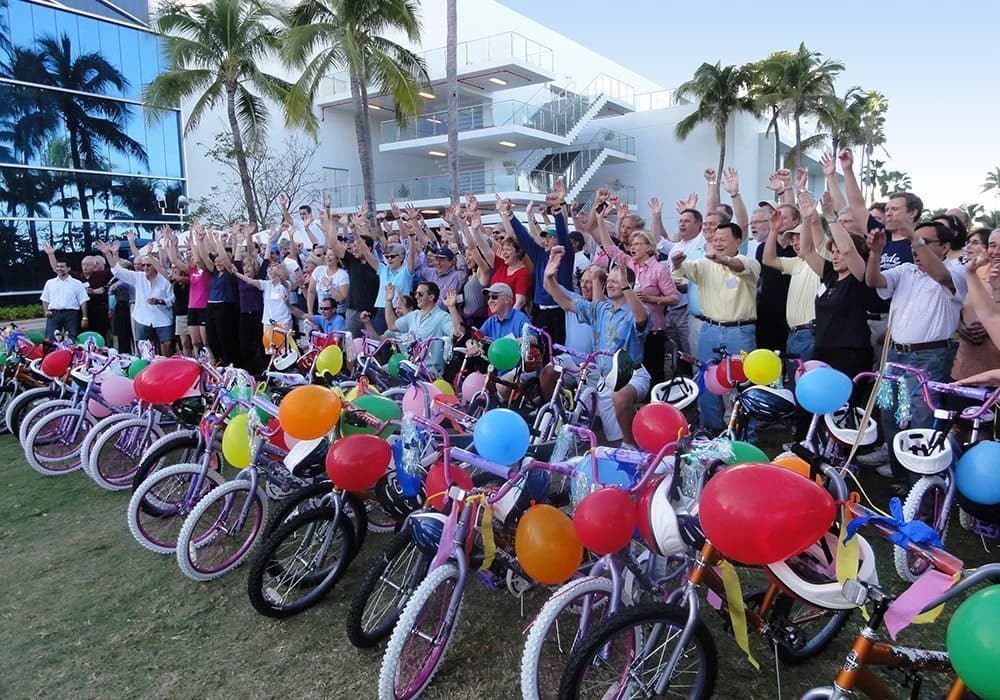
| Morale and belonging | Deliver a shared win, ideally for someone else | Bike Build Donation, any charitable build |
| A new cohort or reorganization | Get strangers to know each other fast | City SmartHunt, Speed Networking |
| Problem solving under pressure | Put a real puzzle on a clock | SmartHunts, escape rooms, Build-a-Raft |
| Celebrating a result | Make the whole company play at once | Game shows, A Minute 2 Win It |
| Leadership | Rotate who leads and debrief what leading felt like | Igniting Team Performance, Bridge to the Future |
Count the group and ask it six questions
Headcount drives the format, the budget, the venue and the lead time, so get a real number early and expect it to move by ten percent.
Count who is actually coming, then think about who they are: physical range, working styles, the introverts and the competitors, anyone with mobility, hearing, vision or dietary needs, and anyone joining remotely. Extreme physical challenges and activities that reward a specialized skill are usually off the table for a mixed group, because the point is that everyone can take part.
A two-minute survey before you lock anything saves a week of second-guessing. Keep it to six questions and only ask what you will use. The answers tell you the goal (if you were unsure), the energy level the room can take, and the time of day people will show up for.
- On a scale of one to ten, how connected do you feel to the people you work with?
- After a long week, do you want energy or calm from a team event?
- Competitive or collaborative: which do you enjoy more?
- Which weekday and time of day would you actually attend?
- Anything that would keep you from taking part (accessibility, dietary, tech)?
- What would make two hours away from your desk worth it?
From our events
Pick the date, then work backwards
Give yourself two months from first inquiry to event day for a typical group, three for a few hundred people, and expect half of that time to pass before the contract is signed.
The lead times below come from our own contracts, measured from the day the inquiry was logged to the day of the event. The median is 60 days. Fewer than one event in twenty is booked with under two weeks to go, and those are almost all small groups adding a program to a meeting that already exists. Large groups take longer for a simple reason: the venue, the shipping and the staffing all have to line up, and each has its own calendar.
The signing itself takes about a month of that window. The median gap from inquiry to signed contract is 29 days, most of it spent on approvals and venue confirmation on the client side. If your procurement process is slow, start it the week you decide to hold the event.
Once you have the date, schedule backwards from it: contract signed, venue confirmed, invitations out, headcount locked, materials shipped, agenda final. The run-up chapter below gives the week-by-week version.
| Group size | Typical inquiry to event | Middle half of clients | Inquiry to signed contract |
|---|---|---|---|
| Under 50 | 50 days | 4 to 12 weeks | About 3 weeks |
| 50 to 99 | 59 days | 5 to 14 weeks | About 4 weeks |
| 100 to 249 | 71 days | 6 to 16 weeks | About 5 weeks |
| 250 to 499 | 85 days | 7 to 22 weeks | About 6 weeks |
| 500 and up | 85 days | 8 to 22 weeks | About 6 weeks |
From our events
Set the budget
Three things set the fee: how many people, what format, and how much is custom. Everything else is a line item you can see coming.
A program fee from a full-service company covers the facilitator and staff, the materials and kits, the setup and teardown, and, for BEST, travel anywhere in the continental U.S. Usually outside the fee: the room, food and drink, audiovisual beyond what the program brings, and any donation the client wants to add on top of a charitable build. Ask for the quote in writing and ask what is excluded before you ask what it costs.
What moves the fee is headcount, since the facilitator, the design and the logistics are largely fixed; the format; and customization, from your branding in the app to questions written from your content or a program designed from scratch. Ask which of those your quote assumes.
- Program fee: facilitator, staff, materials, kits, setup, travel
- Venue: the room, or nothing if it is your office
- Food and drink, and the service charge on it
- Audiovisual beyond what the program brings: screen, sound for a large room
- The donation itself, if you want to add to a charitable build
- Prizes, swag and printing, if any
- Travel and lodging for participants, if they are coming in
Choose the venue for the activity, then for the people
Size the room for what the group will do, since a charitable build needs several times the floor of a game show, and check the loading dock before you check the view.
Six in ten of our events run in a hotel or conference venue, a quarter in the client's own office, and the rest in restaurants, retail spaces, schools and, occasionally, a park. The office is the cheapest room you will ever book and works for anything that fits on tables; the hotel is the default when the event sits inside a meeting or the group is coming from out of town.
The venue questions our program managers ask on every booking are the same ones you should ask: the layout and whether tables and chairs are provided, which floor and whether there is a freight elevator, parking and a loading dock for anything that arrives on a truck, how long we have for setup and teardown, and whether the room is exclusively yours. A build program needs a route from the room to the truck for whatever is being donated. A bridge build needs fifty feet of clear floor. A game show needs a sound system the back row can hear.
Outdoor programs need an indoor backup booked at the same time, and a decision point the morning of. Whatever the venue, walk it, or have someone walk it, with the program's space needs in hand.
- Floor space for the activity, with room for people to move between teams
- Tables and chairs in the count the program needs, or a plan to bring them
- Sound: a microphone and speakers the far corner can hear
- Loading dock, freight elevator and a parking spot for a truck
- Setup and teardown windows agreed with the venue
- Wi-Fi strong enough for the group if the program uses iPads or phones
- Accessibility: ramps, elevators, restrooms, seating for anyone who needs it
- An indoor backup for any outdoor plan, with a go or no-go time
Choose the company, and ask it seven questions
You are hiring the facilitator and the logistics behind them. Judge the company on whether it listens to the goal, employs its own people, and can show you the last hundred events it ran.
A company's website tells you most of what you need before the first call. Look for the size of the catalog and whether each program lists time, group size, video and client comments; the proof, meaning reviews on a third-party site, named clients and industry memberships; the range, in person and virtual, indoors and out, a dozen people to thousands, anywhere in the country; and whether they write about the subject or only sell it.
On the call, the advisor should ask about your goal before your date, your group before your budget, and the room before the program. If the first thing you hear is a list of activities, keep looking. The seven questions below separate the companies that run events from the ones that broker other people's.
- How transparent is your pricing, and what exactly is in a typical quote?
- Are your facilitators your own staff, and who will be in my room?
- How much can the program be customized, and what does that add?
- How fast do you respond, and who is my single point of contact?
- Which formats do you run: in person, virtual, hybrid, and where?
- Can I see references, reviews on a third-party site, and a case study like my event?
- How do you handle a large group, or a group across several locations?
What a proposal from BEST includes
The run-up: eight weeks to the day
Once the contract is signed, the plan is a short list of dates. Here is the one our program managers work from.
Two things on this list are decided later than most planners expect. The final headcount is locked about two weeks out, because that is when materials ship and staff are confirmed, and a ten percent swing either way is normal. The agenda placement is decided early, because it is the thing that most often goes wrong: a program scheduled as the last item of a conference loses the people who leave for the airport, and a program before lunch loses the people who are hungry. Mid-afternoon on the middle day of a meeting is the slot that works.
Promote it like an event, because it is one. Personalized invitations with the date, time, place and a two-line agenda; an FAQ for the skeptics that says what it is and is not; and prizes announced ahead of time. The people who dread team building are dreading the unknown, and a clear invitation removes most of it.
| When | What gets decided | Who |
|---|---|---|
| 8 weeks out | Goal, headcount estimate, date, budget; inquiry sent with the goal first | You |
| 6 weeks out | Program chosen, proposal reviewed, contract signed, venue held | You and your advisor |
| 4 weeks out | Venue confirmed with space needs, invitations out, agenda slot fixed | You, venue, program manager |
| 2 weeks out | Headcount locked, dietary and accessibility needs in, AV confirmed, materials ship | You and program manager |
| 1 week out | Final agenda, tech test for anything virtual, facilitator briefed on your goal | Program manager and facilitator |
| Event day | Setup before the room fills, a fifteen-minute start buffer, a hard stop | Facilitator and staff |
| Day after | The five-question survey goes out | You |
From our events
After the event: measure it and book the next one
Send five questions within 48 hours, put names on the commitments the group made in the debrief, and put the next event on the calendar while the room is still talking about this one.
The survey is five questions, anonymous, and goes out the next day: was it worth your time, what did you learn about someone you work with, what will you do differently this week, what should change next time, did you have fun. Keep the wording identical across events so the numbers compare. The guide to why team building works has the full measurement plan, including what to look at ninety days later.
The debrief will have produced commitments. Write them down, give each one an owner and a date, and bring them to the next team meeting. This is the step that turns an afternoon into a change, and it costs nothing.
Then decide the cadence. A single event is a nice memory; a quarterly one with a goal each time is a program. The clients who see results treat it that way.
From our events