What an icebreaker is for
The first conversation between two strangers is expensive: somebody has to start it, and nobody wants to. An icebreaker pays that cost for the whole room at once by giving everyone the same small task and a reason to talk to the person next to them.
That is the entire job, and it has three parts. It introduces people who have never met, or who have met only as names on a thread. It shifts the room's energy from whatever people walked in with, a flight, a spreadsheet, a difficult morning, to the thing in front of them. And it sets the tone for what follows: a room that has just laughed together listens differently to a keynote, argues differently in a workshop, and plays differently in a game.
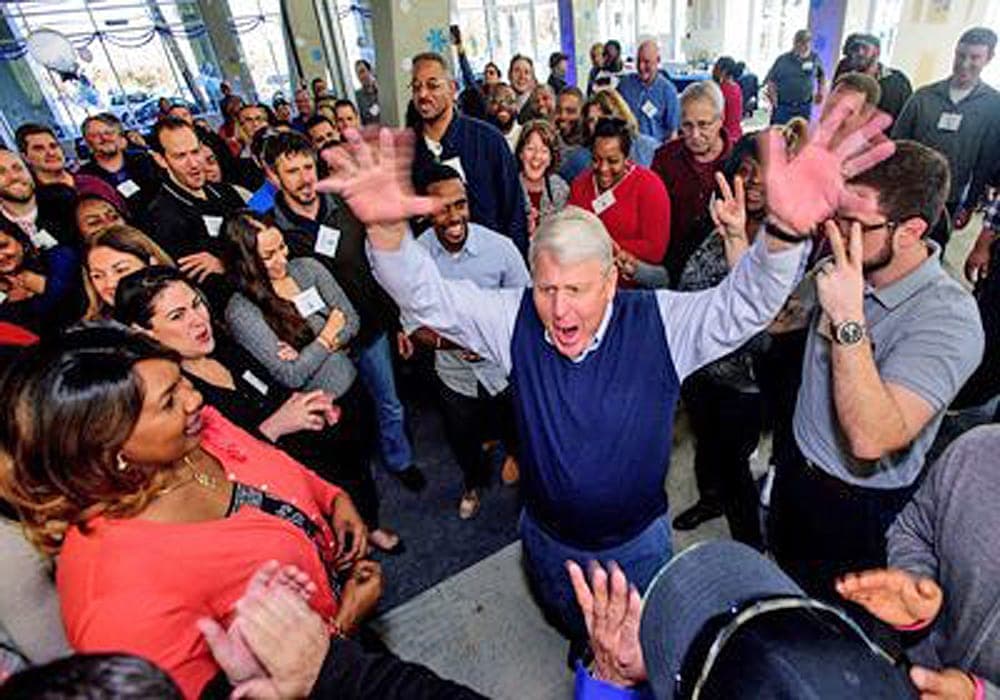
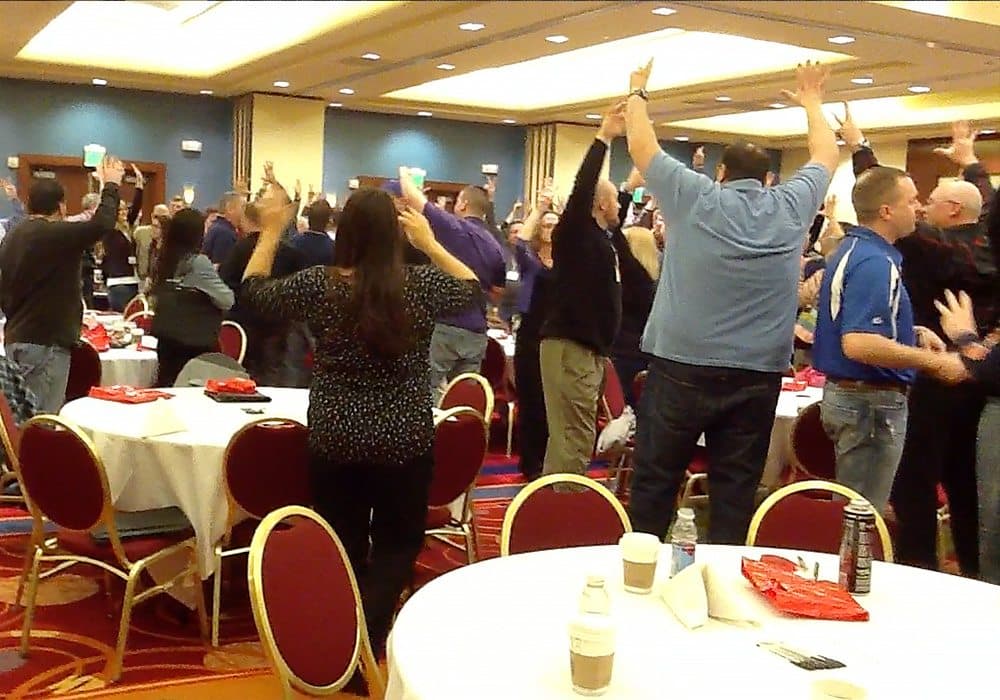
Every program we run opens with one. Our facilitators start with an icebreaker, then explain how the program works, then hand out the iPads or the kits, and by then nearly everyone is in. The reason is practical. A third of any room arrives skeptical, and the skeptics need something to do before they will listen. A Humana client put it plainly after a game show: the icebreaker was critical, because it got people up and moving before the game, so they could enjoy it.
What an icebreaker is for also tells you what it is for nothing. It will teach no skill, resolve no conflict and make no team out of a department in twelve minutes. Those are the job of the program that comes after it. The size of the tool matches the size of the gap.
From our events
The six shapes an icebreaker comes in
Every icebreaker in every list on the internet is one of six shapes. Learn the shapes and you can pick the right one for a room in a minute, without the list.
The first is the commonality game. People move around the room to find others who share something, a birth month, a first job, a coffee order, and stand together. It scales to any size, needs no materials, and is the fastest way to turn a crowd into groups; we call ours Categories. The second is the signature hunt: a sheet of twenty statements, find a different person who fits each one and get their name on the line. It forces people across the room, it has a finish line, and it works as well for 400 as for 40.
The third is the pairing game, where each person carries half of a pair and has to find the other half by asking questions: salt and pepper, yin and yang, peanut butter and jelly. We wrote it up as Find Your Pair, and it is the best design for a room where nobody knows anybody, because it puts one person in front of one other person with a reason to talk. The fourth is the question round, one question, everyone answers in a sentence, in a circle or around a table. It is the right shape for a team that already knows each other and the wrong one above about twenty people, because forty answers to one question is a lecture with forty speakers.
The fifth is the rapid physical game: rock-paper-scissors tournaments where the loser joins the winner's cheering section until the whole room is behind the last two. These shift energy faster than anything else and need a host who can hold a room. The sixth is the rotation: tables of six to eight, a timed task, then everyone moves on a pre-set matrix so that by the end each person has sat with most of the room. This is Speed Networking, and it is the only one of the six that is a program in its own right rather than an opener.
| Shape | Best for | Group size | Minutes | What you need |
|---|---|---|---|---|
| Commonality game (Categories) | Turning a crowd into groups fast | 20 to 1,000+ | 5 to 10 | A host with a microphone above 50 |
| Signature hunt | A room of strangers, a finish line | 30 to 500 | 10 to 15 | One printed sheet and a pen each |
| Pairing game (Find Your Pair) | Nobody knows anybody; new cohorts | 6 to 60 | 10 to 15 | Paper, tape, a pair list |
| Question round | A team that already knows each other | 4 to 20 | 5 to 10 | One good question |
| Rapid physical game | Shifting energy after lunch or a long session | 20 to 1,000+ | 5 to 10 | A host who can hold a room |
| Rotation (Speed Networking) | Strangers who need to have met by dinner | 30 to 1,000+ | 60 to 120 | A matrix, a timer, tables of 6 to 8 |
How long, and where it goes in the agenda
Five minutes to open a meeting, ten to fifteen to open a workshop or a program, twenty to sixty as the kickoff of a conference. Longer than that and it stops being an icebreaker and becomes the event.
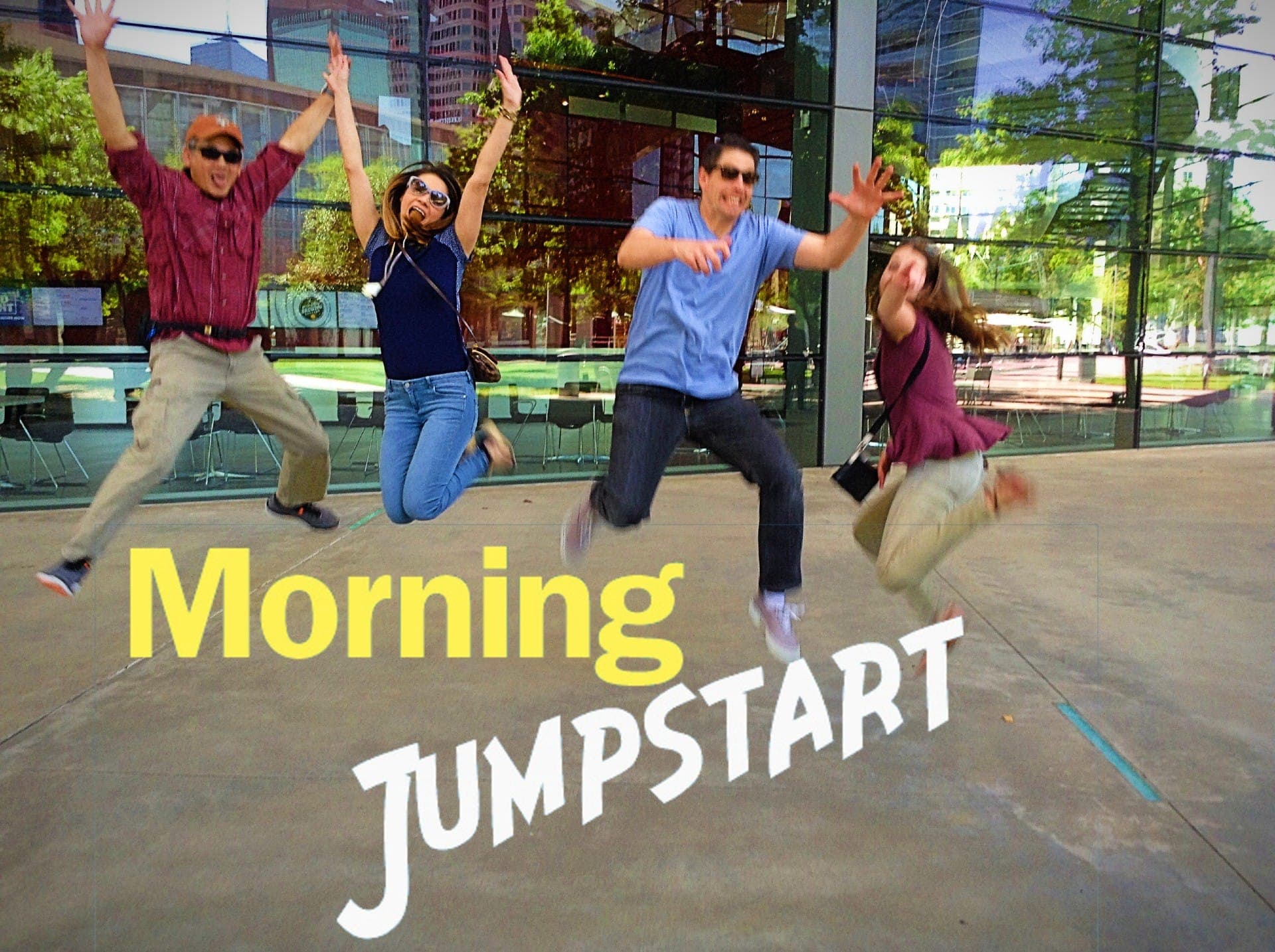
The length follows from the gap you are closing. A weekly team meeting needs a single question and five minutes, because the people already know each other and the job is to shift gears. A workshop or a team building program opens with ten to fifteen minutes, because the room has to be mixed and warmed before it can work. A conference kickoff, where several hundred people from different offices are meeting for the first time, gets twenty minutes to an hour with a host, which is what Morning Jumpstart is for. The rule from our own agendas is that the opener ends while the energy is still rising.
Where it goes matters as much as how long. The obvious slot is the first thing on the first morning, and it is the right one for a group that has never met. The second-best slot is straight after lunch on the second day, when the room is at its lowest and a ten-minute physical game buys back an hour of attention. The third is directly before the session that needs the room open: a workshop on feedback, a planning session, a facilitated debate. What does not work is the icebreaker that floats: run because the agenda had a gap, connected to nothing, forgotten by the coffee break.
There is one more timing fact worth knowing, from Roy's years on the floor. Some people arrive with an attitude of I would rather be somewhere else, and others spend the first half hour making the facilitator prove they can drive the bus. Half an hour in, both groups are usually enjoying themselves. The opener is the first ten minutes of that half hour, and an icebreaker followed by forty minutes of slides undoes itself.
| Setting | Length | Shape | Where in the agenda |
|---|---|---|---|
| Weekly team meeting | 3 to 5 minutes | One question, rotating who asks it | First thing, before the agenda |
| Workshop or training day | 10 to 15 minutes | Pairing game or commonality game | Before the first working session |
| Team building program | 10 to 15 minutes | Commonality game, then team formation | Built into the program's first block |
| Offsite, day two | 10 minutes | Rapid physical game | Straight after lunch |
| Conference kickoff, 100 to 1,000 | 20 to 60 minutes | Hosted energizer, then rotation or hunt | First morning, general session |
| New-hire cohort | 60 to 90 minutes | Rotation designed for strangers | Day one, before the content |
From our events
Size changes everything
An icebreaker that works for twelve people fails for sixty, and one that works for sixty is impossible for four hundred. The breakpoints are about 20, 50 and 200, and each one changes what you can run and what you need to run it.
Under twenty, everyone can hear everyone, and the shapes that depend on that work: a question round in a circle, a pairing game where the whole group watches the last pair find each other, a two-question check-in where each person speaks. The facilitator can be anyone in the room.
Between twenty and fifty, the round-the-circle shapes stop working, because the twentieth answer is the one nobody hears. The room moves to tables. A commonality game, a signature hunt or a pairing game still runs without amplification if the facilitator has a strong voice, and the design shifts to tasks done at the table with a timer and a report-back from a few tables rather than all of them. Seat by tenure: sort the roster by start date, deal it across the tables so every table mixes first-year and tenth-year people, and give the table a task with a deadline rather than a conversation prompt. Get to know each other produces weather talk; build a tower in four minutes produces a team.
Above fifty, nothing runs without a microphone and a stage, and the opener needs a host whose job is the room rather than a manager doing it as a favor. Above two hundred, the shapes that survive are the ones that work on a matrix: a commonality game called from the stage, a signature hunt with a prize, a rotation where every table knows where it goes next. The space matters too. A room of tables at 25 square feet a person is fine for a hosted game; a room set theater-style is dead for an icebreaker, because nobody can move.
| Group | Room | Who runs it | Shapes that work | Shapes that fail |
|---|---|---|---|---|
| 6 to 20 | A circle or one table | Anyone | Question round, pairing game, two-question check-in | Nothing fails yet |
| 20 to 50 | Tables of 6 to 8 | A confident manager or a facilitator | Commonality game, signature hunt, table tasks with a timer | Going round the room |
| 50 to 200 | Tables, a mic, a stage | A host | Commonality game from the stage, hunt with a prize, hosted physical game | Anything without amplification |
| 200 to 1,000+ | General session set for tables, 25 sq ft a person | A host and a second facilitator on the floor | Rotation on a matrix, hunt, called games | Anything that needs people to hear each other across the room |
From our events
Running it: the facilitator's ten minutes
The difference between an icebreaker that works and one that dies is almost never the game. It is the first sentence, the demonstration, the timer and the close.
Set the room before anyone arrives: tables where you want them, the sheets or the tape already out, the microphone tested, the music on. Then the first sentence. Say what is about to happen, how long it will take and what people will get out of it, in that order and in under thirty seconds: we are going to spend ten minutes finding out who in this room you have something in common with, and then we start. People relax when they know the shape of the thing.
Demonstrate it. Do the first round yourself with a volunteer, or show the sheet on the screen with one line filled in. Every group has people who wait until they have seen it done, and a demonstration is faster than any explanation. Then run a visible timer and call the time out loud at the halfway point and with one minute left. A timer does two things: it gives the reluctant a reason to move now, and it gives the whole room permission to stop, which is the part most amateur facilitators forget. End on the clock while the noise is still high.
Close it with a sentence that names what just happened and points at what comes next. You found four people who share your first job; keep them in mind, because in twenty minutes you will be on a team with three strangers and you now know how to do that. Then move. Never follow an opener with a break, an admin announcement or the safety briefing.
- Room set, materials out, mic tested, music on before the first person arrives
- First sentence in under thirty seconds: what, how long, what for
- Demonstrate one round yourself or with a volunteer
- Visible timer; call the halfway point and the last minute
- Leaders in it, on the floor, doing the same task
- End while the noise is still rising, on the clock
- One closing sentence that names what happened and points at what is next
- Straight into the next thing; no break, no announcements
Skeptics, introverts and the things that go wrong
Roughly half of any room would rather listen than speak, and a third arrive doubting the whole exercise. The icebreakers that fail are the ones designed as if everyone were an extrovert who volunteered.
The Myers-Briggs Company puts introverts at more than half the population, and the share in a room of engineers, accountants or lawyers is higher. Introverts are fine with structure and terrible with exposure: a task in a pair or a group of four with something to do with their hands works, and a spotlight in front of forty people does not. So the design rules are simple. Pairs before tables, tables before the room. A task rather than a disclosure. Never a question that asks for something personal on day one; two truths and a lie is a fine game for a team that has worked together for a year and a bad one for a cohort that met at registration. And never, ever, pick someone out.
Skeptics are a different problem and a more useful one. The loudest doubter in the room is usually the most persuadable champion, because when they turn, everyone sees it. Roy's rule is that they will give you half an hour to prove you can drive the bus. Give them a job early, put them on a team with people outside their reporting line, and let the structure do the work. Skip the sales pitch and the apology; an opener introduced with a nervous laugh and the words I know this is cheesy is dead before it starts.
Then there are the mistakes that kill an icebreaker whoever is in the room. A leader who stands at the back with a coffee, which tells the room the exercise is for other people. A game with no timer, which runs until the keenest table is bored and the slowest has barely started. And the floating opener, unconnected to what follows, which teaches a group that team building is the filler before the real agenda.
| The mistake | Why it fails | Do this instead |
|---|---|---|
| Two truths and a lie with strangers | Asks for disclosure before there is trust | A pairing game or a commonality game |
| Going round the room with 40 people | Answer twenty is heard by nobody | Tables of six, one report-back per table |
| Leaders opting out | Signals the exercise is for the ranks | Leaders on the floor, same task, same timer |
| No timer | Runs until the room is bored | Visible clock, halfway call, hard stop |
| Introduced with an apology | Gives the skeptics permission | Say what, how long, what for; then start |
| An opener with nothing after it | The energy has nowhere to go | Straight into the session it was built for |
| Picking someone out | Introverts leave the room in their heads | Give the quiet person a job in a pair |
Three you can run yourself tomorrow
None of these needs a host, a budget or more than a pen. Each is a classic, and each is here because it survives contact with a real room.
Find Your Pair, for six to forty strangers, ten to fifteen minutes. Before the session, write famous pairs on slips of paper, one half per slip: salt and pepper, Mickey and Minnie, peanut butter and jelly, yin and yang, one pair per two people. Tape a slip to each person's back without letting them see it. On go, everyone moves around asking yes-or-no questions to work out what is on their own back, then finds their other half. Pairs sit down together and learn three facts about each other. If there is time, each person introduces their partner to the group in one sentence.
Categories, for twenty people or a thousand, five to ten minutes. The facilitator calls a category and everyone has sixty seconds to find the others who share their answer and stand together: the month you were born, the number of siblings you have, your first paying job, how you take your coffee. Call four or five rounds, getting more personal by a step each time and never further than first job. The last round becomes the teams for whatever follows, which is the trick: a commonality game is team formation in disguise, and nobody has to be told who they are with.
The two-question check-in, for a team of four to twenty who already know each other, twenty minutes, once. Standing in a circle, each person answers two questions in turn: what have you brought to the teams you have worked with, and what can people count on you for. Managers answer last. It is the only icebreaker in this guide that asks for something, and it works only because the two questions are about contribution rather than confession. Write the answers down and revisit them in a month. For the weekly meeting, the lighter version is a single question of the day, rotating who chooses it; our list of 120 is linked below.
- Find Your Pair: slips written, one pair per two people, tape ready; 10 to 15 minutes; end with partner introductions
- Categories: four or five categories written down in advance, from birth month to first job; 60 seconds a round; the last round forms the teams
- Two-question check-in: circle, two questions, managers last, answers written down; 20 minutes, once
- Question of the day: one question, rotating who picks it, three minutes at the top of the meeting
From our events
When to hire a host, and what that looks like
Hire a host when the room is over about fifty, when the opener is the event, or when the group is a cohort of strangers who need to have met by the end of the day. Below that, the best facilitator is a confident manager with this guide.
A hosted opener is a different product from an icebreaker. Speed Networking is the clearest example: a host and a floor facilitator run an energizer, then four to six timed rounds at tables of six to eight, each round a small game and a prompt, with every table moving on a matrix designed so the pairings never repeat. It runs one to two hours, it takes thirty people or a thousand, and in our records the median group is just under a hundred. It is what we run for a new sales cohort, a merged department, or a conference where two offices have never been in a room. Match Me If You Can does a similar job as a game show, an hour to ninety minutes, for a room that would rather watch three contestants than rotate. Morning Jumpstart is the twenty-to-sixty-minute conference energizer, the one designed to be the first thing on the first morning or the pick-me-up after lunch.
Then there is the opener inside a program, which you get without asking. A Minute 2 Win It opens with a demonstration round and a kickoff; Best Corporate Feud opens with a lighthearted icebreaker and team formation; a bike build opens with a get-in-gear round before the tools come out. When you book a two-hour program you are booking its first fifteen minutes too, and it is usually the part that decides whether the skeptics join in.
What a host changes is the ceiling. A manager can run Categories for forty people. A host can run it for four hundred, form sixty balanced teams from it, and have the whole room seated with its new teammates in eight minutes, which is the difference between an opener and a lost half hour on the first morning of a conference.
| Format | Length | Group size | What it is for |
|---|---|---|---|
| Speed Networking | 1 to 2 hours; median booked group 94 | 30 to 1,000+, tables of 6 to 8 | A cohort or a conference that has to have met by dinner |
| Virtual Speed Networking | 60 to 90 minutes; median group 56 | 30 to 1,000+, breakouts of 4 to 6 | The same job for a distributed team |
| Morning Jumpstart | 20 to 60 minutes | 30 to 1,000+ | The first thing on the first morning, or after lunch |
| Match Me If You Can | 1 to 1.5 hours | 30 to 1,000+ | A kickoff or a wrap-up as a game show |
| A Minute 2 Win It | 1.5 to 2 hours; median group 60 | 30 to 1,000+ | A full program that opens itself, the most-booked short-format in our records |
| Orientation Game Show | 1 to 1.5 hours | 30 to 1,000+ | Company history and values as a hosted quiz for new hires |
From our events
Sources
- Gallup, US employee engagement indicator
- The Myers-Briggs Company, Introversion: why we need to reshape the way we work
- The Conference Board, Job engagement declines for a third of workers
- BEST, A Find Your Pair icebreaker
- BEST, The four essential roles of a team building facilitator
- BEST, Remote, office or hybrid: how your people work matters more than where
- BEST, Managing introverts in the workplace
- BEST, The two-question debrief
- BEST, Seat them by tenure