Generations of workers have obsessed over “climbing the corporate ladder.” But that progression is increasingly broken, as workers turn down promotions for reasons ranging from concerns over stress to worries about AI in the workplace.
This trend isn’t healthy for employees (in terms of professional and compensation growth) or their employers (who need a strong “bench” of potential future leaders). While not every employee aspires to or has the capacity for a management role, business leaders need to:
- Provide alternative career paths for those with the potential to be outstanding individual contributors (but not leaders);
- Explain to those with potential what these roles entail, making the benefits and expectations clear without “selling” or sugar-coating; and
- Be open to examining how their culture may be turning people off from aspiring to lead, and willing to make positive changes.
This post looks at what’s happening; why employees are hesitant to seek or accept promotions; how employees can make the best decisions for themselves; how businesses can build a pipeline of management talent; and the role that professional development training and team building can play in developing a healthy, productive culture for current and future leaders.
What’s Happening: More Employees Are Questioning the Traditional Path to Management
Promotions have traditionally been equated with success: more money, influence, responsibility, and opportunity. Yet a growing number of workers, particularly (though not only) younger workers, are saying “no.”
According to leadership author and speaker Jared Lindzon’s Fast Company article Why so many workers are turning down promotions:
- 58% of workers said they would turn down a promotion that required them to be available outside of normal business hours.
- “71% of American respondents aged 18 to 34 would decline a move into management if it came at the cost of work-life boundaries, and 65% would prefer career progression that didn’t include overseeing others.”
- “One in three workers turned down a promotion last year. The top reason respondents gave for doing so was that they didn’t want to lose their current degree of work-life balance.“
Those are some sobering statistics, and again the picture they paint isn’t ultimately healthy and positive for workers or their employers. And it gets worse. In Should you take that promotion?, PhD sociologist and author Tracy Brower adds:
“Only 6% of respondents in a Deloitte survey of 22,500 millennials and Gen Zers across 44 countries aspire to leadership roles. Furthermore, 25% of leaders in a Gartner survey of 3,000 respondents would prefer not to manage people. Perhaps most telling: In a survey of more than 3,000 people by Careerminds, one in three respondents reported turning down a promotion.”
Lindzon takes care to add, however, that “It’s not that (employees) want to stay where they are. (Rather) they want greater responsibility and higher earnings, while maintaining boundaries around their personal lives.”
Young people aren’t rejecting ambition, but are “less willing to accept management (at least as they see it currently structured) as the automatic next step in a career.”
What’s Causing It: Why Employees Are Saying No to Management
Employees across generations, but particularly younger workers, are reluctant to move into management roles for a variety of reasons. Here are the top five drivers of that hesitance.
1. Work-Life Balance and the “Always On” Manager
Already feeling burned out, many employees are wary of what they perceive will be an open-ended commitment of their time to work. According to Lindzon, “Two-thirds of American workers believe that promotions come with unspoken expectations over their time outside of work, while 56% have witnessed colleagues become noticeably less happy after moving into management.”
What the survey results show is that prospective leaders aren’t just imagining what management might be like. They’re watching their managers.
2. More Responsibility Isn’t Always Worth the Reward
In the Careerminds research cited by Lindzon in Fast Company, 16% of respondents said the pay increase wasn’t worth the additional responsibility, while another 16% said it wasn’t worth the additional stress.
That’s not to say compensation doesn’t matter. Brower notes that 53% of respondents in the same Careerminds research wouldn’t accept a promotion without at least a 20% raise.
The bottom line is that employees look at the whole package when considering a promotion into leadership: compensation, workload, autonomy, growth, purpose, flexibility, and quality of life.
3. Middle Management Has Become a Tougher Job
Middle management has gotten more challenging, and first-line supervisors considering a promotion have taken notice. In The middle manager’s AI survival guide, Fast Company editor Shalene Gupta reports:
“Since 2013, the average number of direct reports has increased by almost 50%, to 12 employees, according to Gallup. The same poll revealed that less than one-third of managers are engaged at work, while over a quarter are planning to leave their jobs.”
Beyond the impact of AI in the workplace, middle managers are being squeezed between organizational directives and employee needs amid layoffs, staffing changes, political tensions, and economic uncertainty.
4. AI Adds Another Layer of Uncertainty
Middle managers are increasingly tasked with translating corporate AI goals into agentic workflows while dealing with employees who range from enthusiastic adopters to people fearful about losing their jobs.
AI doesn’t make leadership generally, and middle managers specifically, less important. In many organizations AI may make the distinctly human aspects of leadership, including communication, judgment, coaching, empathy, conflict resolution, and change management, more important.
Furthermore, there’s a strong argument that the challenges of effective AI implementation make middle managers more vital than ever, not superfluous. As Gupta concludes:
“Despite all the uncertainty in the arms race over AI—how fast to go, what to compromise in the process, and whether or not the race is actually worth it—implementation is all in the hands of middle managers. They dictate what gets automated, what doesn’t, and what is an acceptable bar for quality—even if they have qualms.”
5. Younger Employees Have Different Expectations of Leadership
In Gen Z isn’t quiet quitting—they’re rejecting outdated leadership, organizational strategist Jeff LeBlanc argues that younger workers increasingly expect psychological safety, transparency, fairness, clear expectations, consistent feedback, and leaders who listen.
He contends that “Leadership models that worked for previous generations (such as transformational leadership and servant leadership) often fall flat today.” We’ve noted before how each generation’s workplace expectations are shaped by the environment they grew up in, and even wrote an ebook about generational communication differences in the workplace.
LeBlanc adds that, “Forward-thinking companies are already proving that when leadership evolves, Gen Z thrives.” If organizations want younger employees to become tomorrow’s managers, they need to demonstrate a version of leadership those employees can actually aspire to.
For Employees: Is Leadership Right for You?
If you are considering but unsure about a promotion into management, this section is for you. If you are a leader offering someone a promotion, you may want to share this section with them to help them make a reasoned, considered decision.
Here are three key questions based on Tracy Brower’s framework in her Fast Company article, plus a bonus fourth consideration.
Will the role help you grow?
Per Brower, “When thinking about a promotion, decide whether the expanded responsibilities will give you new perspectives or help you develop new skills.”
In addition to cultivating valuable capabilities, will the promotion help you encounter new challenges, gain influence, and/or move toward your longer-term career goals? Difficult work isn’t necessarily bad work. A stretch opportunity can be energizing and fulfilling.
Will you get the internal support you need?
Look beyond title and salary. Will you receive training? Mentoring? Clear expectations? Feedback? Resources? Do you respect the leaders you’ll be learning from?
Brower also advises, “Ensure that you want to commit at least a year and a half or two years to the role. This time horizon is a fair amount to expect and also gives you a marker about your desire for the job.”
Are the demands worth the rewards?
Consider compensation, but also workload, interest in the work, flexibility, career direction, and your current life circumstances. This guidance is vital regardless of your stage in life, whether you’re young and single, juggling the demands of raising a young family, or years into your career but caring for aging parents.
And regardless of life and career stage, Brower counsels, “Ask plenty of questions about the role so you can anticipate as accurately as possible.”
Is this the right time?
As executive coach Jessica Wilen, Ph.D writes in When you’re asked to apply for a promotion—but you’re not sure you want it:
“The question isn’t only “Can I do this?” It’s also “Do I want to live this way?” Promotions can be career accelerators, but they also reconfigure your days, your priorities, and your sense of balance…
“When someone says, ‘You’d be great for this,’ they’re recognizing your readiness. But willingness—the energy and capacity to take it on—is a separate question.”
A promotion means more money, prestige, and interesting challenges, but also more demands on your time. Will your life outside of work provide support for your career move or compete for your time and attention?
Keep in mind that “not now” doesn’t mean “not ever.” Moving up the corporate ladder may be appealing, but not the right change at this point in your life.
For Business Leaders: Rebuild the Leadership Pipeline
Every organization needs a strong bench of potential future leaders. Companies grow, enter new markets, and make acquisitions. People move up, or move on. In addition to addressing the points above (providing support for new managers, adequate compensation, and honestly addressing employee concerns), here are five key considerations for developing future leaders.
1. Don’t Assume Your Best Performer Will Be Your Best Manager
A highly skilled salesperson, engineer, marketer, accountant, or technician may love the work they currently do. Managing people, and ultimately learning how to become a great leader, requires different capabilities.
Attitude and Aptitude
Assess both the employee’s interest in a management role and readiness. Are they willing to learn, do they have a positive mindset, and do they understand the importance of influence and support, rather than seeking power? Do they have the raw skills (data analysis, planning and organization, prudent judgment) required for management?
Communication and Coaching Ability
A significant part of a leader’s role is communicating up, across, and down the organizational chain of command. A management candidate should have basic strengths in these areas, but those abilities can be expanded through professional development training.
For example, our Manager’s Guide to Business Coaching teaches feedback techniques and proven coaching and employee training practices that help employees improve while strengthening relationships and trust. Presentation Skills Training covers specific skills to help leaders deliver compelling, persuasive presentations with confidence.
Emotional Intelligence
A strong emotional quotient (EQ) is vital for effective leadership. Our Emotional Intelligence Training teaches employees how to manage their own emotions more effectively, understand and respond empathetically to the emotions of others, and take responsibility to contribute to their fullest.
2. Give People More Than One Way to Advance
Employees shouldn’t necessarily have to choose between becoming a manager or hitting a career ceiling. Technical expertise, mentoring, project leadership, cross-functional responsibilities, and other opportunities can provide advancement without the responsibility of managing direct reports.
Providing those alternative paths may make an organization’s management team healthier by increasing the likelihood that the people accepting those jobs actually want them.
3. Show Employees What Leadership Really Means
Leadership isn’t just about assigning tasks, attending meetings, enforcing policies, defending budgets, and answering emails after hours.
It can mean helping other people succeed, influencing decisions, solving difficult problems, coaching colleagues, building culture, developing talent, and creating an environment where a team can accomplish more together.
Viewed that way, it’s clear that many leadership capabilities are useful before someone becomes a manager, and even if they never do. That’s why every employee can benefit from leadership training; it teaches communication and negotiating skills that help employees do their jobs more effectively and collaboratively, even as teammates and individual contributors.
4. Prepare People Before They Get the Title
Too often, corporate executives believe they are doing an adequate (or better) job of preparing their organization’s future leaders when that’s not actually the case. As Jared Lindzon reports:
“97% of HR professionals believe their organization provides adequate training to help managers navigate conversations around layoffs, AI anxiety, and workplace conflicts. But just 41% of managers agree.”
Even exceptional individual contributors don’t magically become great leaders once they are promoted. Some will fail, while others will figure things out as they go along—which generally isn’t ideal for that manager, the company, or their direct reports.
From teaching essential skills for new managers to techniques for managing Gen Z employees more effectively, leaders require different skills than individual contributors. These skills can be learned, but must be taught and developed competently. Research shows that improving corporate training is among the most powerful approaches to improving business performance.
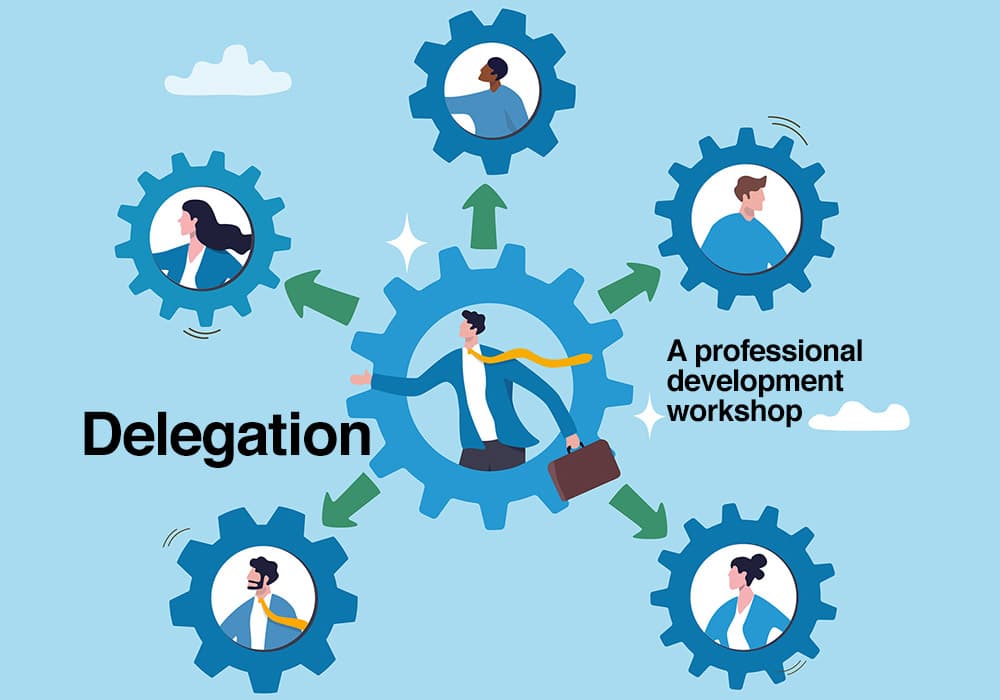
Our Essential Supervisory Skills workshop and Delegation Styles course are great places to start, while programs like Igniting Team Performance® help leaders at all levels hone their skills.
5. Make Management Sustainable
While it’s essential, training alone isn’t enough.
If managers are overloaded, underpaid, constantly available, responsible for too many people, or given accountability without authority, employees will notice. Organizations can’t simultaneously make management miserable and wonder why nobody wants to become a manager.
As we wrote in our post on how to improve workplace culture and why it really matters, “A strong culture keeps employees engaged, motivated, and inspired to do their best. A weak workplace culture, on the other hand, can negatively impact profitability, talent retention, and even employee well-being.”
How Team Building and Professional Development Can Help
To improve both the training and management environment for future leaders, start inside your organization. Who has great ideas and valuable knowledge to share? Not only will those tapped for their talents feel honored by the recognition, but they also bring essential real-world understanding of the organization and its unique challenges to their teaching.
That training is best complemented by outside perspective for facilitating corporate meetings and training. As we’ve noted, “Bold new ideas often emerge from reframing the familiar. Contributors from outside the organization bring their own unique experiences across industries, technologies, and other organizations to spot patterns that workers within an enterprise may be blind to.”
In addition to emotional intelligence, as detailed above, here are three vital skills areas where corporate team building activities and professional development training can build on your organization’s internal training programs to build a strong bench of future leaders.
Communication and Self-Awareness
Future leaders need to understand how their own communication and behavioral styles affect others. As we noted in our post on the importance of face-to-face communication, strong communication skills build trust and connection, enable more productive collaboration, and ultimately improve both business performance and employee engagement.
Professional development workshops like our DiSC Workshop, Myers-Briggs Type Indicator (MBTI) Training, and Belbin Behavioral Assessment can help employees better understand their individual strengths, behavioral preferences, team roles, and differences in how colleagues communicate and work.
Coaching and Developing Others
One of the biggest transitions from individual contributor to manager is moving from “How well can I do the work?” to “How effectively can I help other people do the work?” Professional development programs focused on coaching skills, delegation, feedback, and manager development play a vital role here.
Conflict Resolution Training teaches vital, proven techniques for managing the inevitable disagreements that arise in the workplace in a professional, respectful, and non-emotional manner. It helps managers turn potentially volatile and relationship-damaging situations into mere bumps in the road.
We also offer programs like Understanding Your Virtual Team and Virtual Coaching and Feedback that address the unique skills required to manage hybrid and fully remote teams.
Collaboration and Team Leadership
Team-building programs can give emerging leaders a lower-risk environment for practicing communication, delegation, problem-solving, adaptability, creative thinking, and collaboration. These programs provide opportunities to practice leadership behaviors in action, in a virtually zero-risk and zero-stress non-work environment.
Our Total Recall activity creates a fast-paced environment that mirrors real workplace communication challenges. It delivers a memorable way to strengthen accuracy, collaboration, and effective two-way communication across any team.
Team building activities like Competition to Collaboration®, Bridge to the Future, and Pipeline impart valuable lessons about collaborating both within and across teams. They teach participants to work together more effectively across the corporate org chart.
Final Thoughts: Leadership Is Changing, Not Disappearing
When an employee turns down a promotion, that doesn’t necessarily signal a lack of ambition. It can indicate that they’re thinking more carefully about what kind of work they want, what they’re willing to trade for advancement, and what leadership should look like.
For employers, that’s both a challenge and an opportunity. Companies still need a pipeline of capable leaders. But building that pipeline may require them to stop treating management as the automatic next rung on the ladder, and instead:
- Identify employees most suited to leadership;
- Create alternative career advancement paths for strong individual contributors who are not interested in or not a great fit for management;
- Make management roles sustainable; and
- Start developing leadership skills well before a promotion is offered.
And for employees, the question becomes less about “Should I take the promotion?” and more of “Is this the kind of opportunity that will let me grow, contribute, and succeed without sacrificing what matters most to me?”
If identifying employees with leadership potential and developing their leadership skills are challenges within your organization, we should talk. Contact Best Corporate Events to discuss your objectives and how we can recommend, deliver, and even customize team building and professional development programs that address your specific needs.