There’s an old proverb (and best-selling book title) that says, “a fish doesn’t know it’s wet.”
Broadly, that speaks to the human tendency to get caught up in our own little worlds. We don’t see mistakes we may be making or opportunities we may be overlooking because we can’t or don’t consider these aspects of our lives from a different, outside perspective.
In business, this reflects the common practice of tackling problems from an internal standpoint. Leaders take current structures, capabilities, and business processes as givens that constrain their range of action. An outside perspective reveals new possibilities—for innovation, decision-making, training, team development, and more—by ignoring artificial constraints.
This post examines the research on the business value of seeking outside perspectives, the benefits of different points of view, the risks of not doing so, and practical guidance for seeking out and using insights from outside expertise.
Why is Outside Perspective Vital?
According to Christoffer Husell, writing for Shift Actions, internal innovations are often limited to incremental improvements because “internal teams are beholden to existing KPIs, quarterly cycles, and institutional risk aversion. By contrast, external collaborators operate without the burden of internal politics or legacy metrics. They are free to pose fundamental questions: What if our core assumptions are wrong? What if the customer problem lies elsewhere?”
Bold new ideas often emerge from reframing the familiar. Contributors from outside the organization bring their own unique experiences across industries, technologies, and other organizations to spot patterns that workers within an enterprise may be blind to.
As Husell concludes:
“External collaborators often provoke discomfort. And rightly so. Unlike internal teams, they are not bound by the imperative to defend past decisions. Their job is to ask the uncomfortable questions, explore uncharted directions, and challenge entrenched narratives. When managed well, that friction becomes fertile ground for reinvention.
“Long-term value creation depends not only on new answers, but on better questions. External collaborators excel at reframing problems—bringing new signals from the market, insights from adjacent industries, and emerging technologies into play.”
Research Proves the Value of Outside Perspective
In telling the story of Dr. Patricia Bath, the inventor of modern cataract surgery (and the first Black woman to receive a medical patent), three MIT professors point out:
“Research shows that it’s often easier for outsiders to connect disparate thoughts because they come to the table with fewer preconceptions than insiders. In one research study, for example, separate groups of carpenters, roofers, and in-line skaters were asked for ideas on how to improve the design of carpenters’ respirator masks, roofers’ safety belts, and skaters’ kneepads. An independent assessment of the solutions found that each group was significantly better at generating novel solutions for the fields outside their own.
“A larger-scale study…found that the winning entries (in an innovation contest) were more likely to have come from ‘unexpected contributors’ whose areas of expertise were foreign to the focal field of inquiry.”
A separate study on crowdsourcing concluded that “industry outsiders were more likely than insiders to come up with breakthrough solutions to relatively complex and intractable R&D problems.”
The value of outside perspective isn’t limited to new product innovation. Outside experts can also help improve processes, teamwork, and workplace culture. When planning corporate meetings, outside facilitators can help organizations build stronger workplace relationships, incorporate new skills, and improve employee engagement and collaboration.
Benefits of Outside Perspectives
Inviting outside perspectives can provide enterprises with a wide variety of benefits across people, products, and processes. Writing about value creation for Branding Strategy Insider, Steve Wunker details several of these benefits. He notes that consistently seeking outside perspectives:
- Brings in new ideas and new ways of thinking;
- Helps companies reimagine and vet the ideas they already have;
- Provides unbiased opinions on the value and ingenuity of new ideas;
- Suggests alterations common outside the firm’s industry (for example, IKEA developed the board-on-frame design for several of its products after one of its developers toured a door factory); and
- Improves the quality and clarity of messaging by eliminating insider acronyms and jargon.
Incorporating new ideas and perspectives can re-energize leaders and teams by helping them break out of routine thinking.
Risks of Avoiding Outside Perspectives
In the absence of outside perspectives, organizations run the risks of groupthink and confirmation bias (we must be right, we all agree!); resistance to change; limited growth; and even the loss of top talent.
As David Michels writes in Forbes, when an organization stagnates and falls behind competitors, “if your stakeholders aren’t seeing value, they have other options:
- Investors can sell your stock;
- Customers can choose a different supplier;
- Suppliers can sell to a different customer, and
- Employees can find a new place to work.
Consequently, “what they say should carry weight.”
Be Like Apple, Not Like Blockbuster
The benefits of embracing and the risks of avoiding outside perspectives are perhaps best illustrated by two familiar stories.
When Steve Jobs and a team of Apple engineers visited the Xerox Palo Alto Research Center (PARC) in 1979, they came away with new or refined ideas for the graphical display, mouse, Ethernet, and object-oriented programming. The leadership at Xerox “didn’t understand what was in their hands.” Steve Jobs did.
Apple built its business on finding innovative technologies and making them more elegant, reliable, and easy to use. The list of technologies that Apple didn’t invent but did improve and capitalize on includes:
- Wireless earbuds
- Smartphones
- Smartwatches
- Biometric security (face ID)
- Voice assistants
And much more. Steve Jobs is quoted as saying, “We have always been shameless about stealing great ideas.”
Blockbuster, in contrast, famously had the opportunity to acquire Netflix for just $50 million back in 2000. Blockbuster executives “laughed them out of the room.”
“Netflix was a tiny money-losing startup. Blockbuster was the king of video rental. Why would they pay $50 million for a company that didn’t even make a profit?”
We know how that story ended. “Ten years later, Netflix was worth $13 billion. Blockbuster filed for bankruptcy. The company that refused to pay $50 million for Netflix ceased to exist while Netflix became one of the most valuable media companies in the world.”
The leaders at Blockbuster couldn’t imagine “how the internet would change media consumption.” DVDs by mail (or, even more unimaginably, streaming video) would upend their entire business model, which was focused on huge investments in real estate and physical distribution. That was unthinkable! It would destroy their business, so it simply couldn’t happen…until it did.
How to Bring in Outside Perspectives
Okay, so outside perspectives can be incredibly valuable (and ignoring them incredibly risky). How can an organization go about making this a regular part of its business operations?
Steve Wunker details two approaches. One is via “an open innovation program that establishes permanent channels for reaching out to experts, customers, and other thought partners. These programs are useful both for bringing in new ideas and for generally staying abreast of trends and innovations in other industries.”
He uses 3M as an example, noting that the company “regularly sends its employees out to interact with other business units, outside experts, and customers. A few years back, when the abrasives division introduced its self-sharpening sandpaper, it used seven different technologies to create the product. Only two of those actually came from the division itself.”
A second approach involves “opening the discussion to people with diverse experiences. When you’re planning an ideation session or even just having discussions about a challenge, consider what people from other departments or companies might be able to add. Some groups even institutionalize this into their hiring practices.”
Christoffer Husell recommends taking a partnering approach. He writes that forward-leaning enterprises “are increasingly turning to external collaborators—venture studios, technologists, entrepreneurs, and domain specialists. These partnerships do more than inject novelty; they challenge orthodoxy, catalyze experimentation, and equip internal teams to think beyond the constraints of legacy systems.”
Corporate meetings of any type—retreats, all-company gatherings, sales kickoff events—provide an ideal opportunity to expose the entire workforce or select departments and teams to outside ideas. These can range from technical sessions to professional development training, presentations from business authors, specific skills development, and “fun with a purpose” team building programs.
How Outside Perspectives Build Corporate Culture and Teamwork
Professional corporate trainers and team building facilitators bring valuable outside perspective to enterprise teams, whether as part of a corporate meeting or a stand-alone event, based on:
Cross-industry experience
Professional facilitators and trainers have worked with organizations large and small, in B2B, consumer products, services, non-profits, and government agencies. They’ve learned a wide range of perspectives from hundreds of unique engagements. Our guide from our team building experts covers when to bring that help in and what to ask for.
Addressing different business goals
Particularly in terms of team building programs, our facilitators have helped organizations unify teams in situations like mergers, major business changes, downsizing, rapid growth, integrating remote teams, improving innovation, and more.
Working with different personality types
Through delivering programs like our DiSC Workshop and Myers-Briggs Type Indicator (MBTI) Training hundreds of times, our facilitators and trainers have developed deep knowledge of personality preferences and communication styles, and how to share that knowledge and experience with corporate teams.
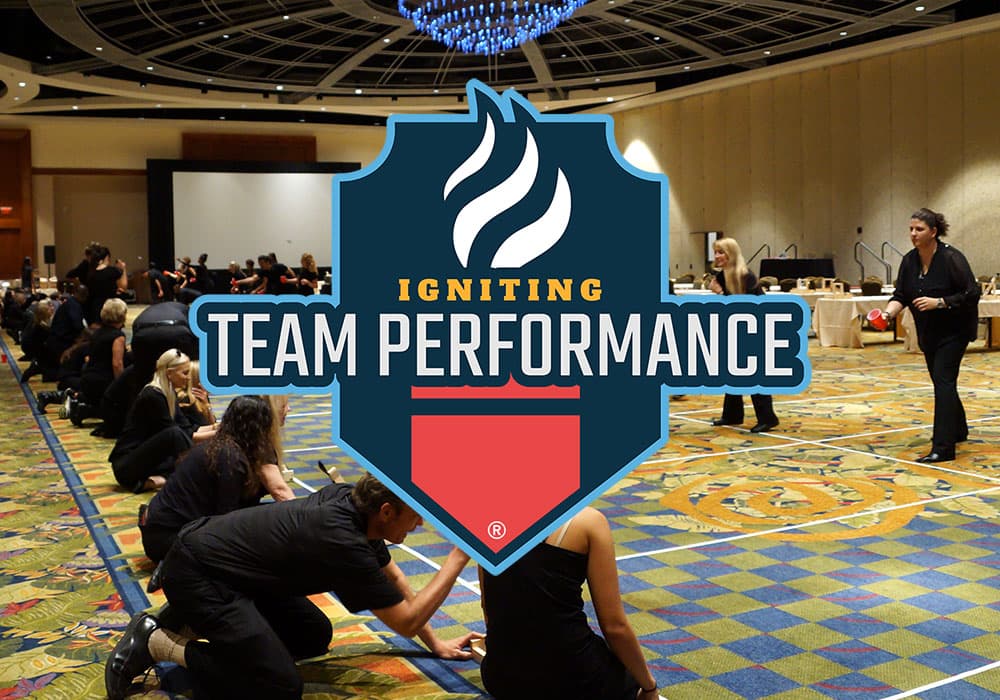
When our facilitators deliver a program like Igniting Team Performance®, the sequentially more difficult challenges introduced aren’t abstractions. They incorporate years of knowledge about what works and what doesn’t, in specific enterprise scenarios.
They bring their passion, experience, and most importantly, their perspective, to every team building exercise, from a collaboration-focused activity like Bridge to the Future to charity team building events like Build-a-Guitar® or Helping the Homeless.
As Roy Charette, Founding Partner and Chief Field Operations Officer at Best Corporate Events, has said, “In more than three decades of delivering team building programs, I’ve made every mistake possible. Today, our clients get the benefit of all that learning – without the consequences.”
Benefitting From Outside Perspectives Isn’t One-and-Done
High-performing organizations make learning from professionals with different perspectives a regular, recurring practice. Again, corporate meetings of all types provide an excellent environment for absorbing external insights, and it’s vital to do this on an ongoing basis because:
Teams change: New hires join the organization, long-time employees retire or move into new roles, and the makeup of teams changes. Learning from outside perspectives has to be as dynamic as organizational structures.
Challenges change: product lifecycles move through stages, new product and service lines are introduced, and companies make acquisitions, all of which introduce new obstacles, objectives, questions, and goals.
The world changes: New competitors emerge, sometimes in disruptive ways. Generational shifts in the workforce create new challenges in managing cultural and communication differences in the workplace. Transformative technologies like artificial intelligence create both fear and incredible opportunities in the workplace.
Enterprises that make learning from outside perspectives a regular part of business activities are best positioned to adapt and thrive amid rapid internal and external change.
Final Thoughts on the Value of Outside Perspectives
Faced with the constant pressure of objectives and deadlines, it’s easy for leaders and teams to get inwardly focused. Even when increasing efficiency and exceeding performance targets, there’s a danger of focusing on the wrong outcomes or overlooking easier ways to accomplish objectives if the organization doesn’t make a regular practice of seeking external perspectives and insights.
Enterprises that fail to invite outside perspectives risk losing market share, investor and customer confidence, and key employees. Those who make it a regular practice are not only less likely to be blindsided by new industry developments but may even create the disruptions that force competitors to adapt.
Corporate meetings are an ideal environment for bringing in outside experts, whether the focus is innovation, strategy, or employee and team development. Our experienced, professional trainers and facilitators bring decades of experience across a wide range of industries and business scenarios to every engagement, providing a valuable outside perspective that helps boost team cohesion and performance.
Ready to consider some outside perspectives that can help your organization be more like Apple (and not like Blockbuster)? Contact Best Corporate Events today to start a conversation about how we can bring our extensive experience and expertise to help you build stronger teams and even customize team building programs to address your specific situation.