Where we run it: your office, hotel or venue
The program travels to the room you already have. Our facilitators run events in offices, hotel ballrooms, conference venues and restaurants nationwide, and the room is the one thing you provide.
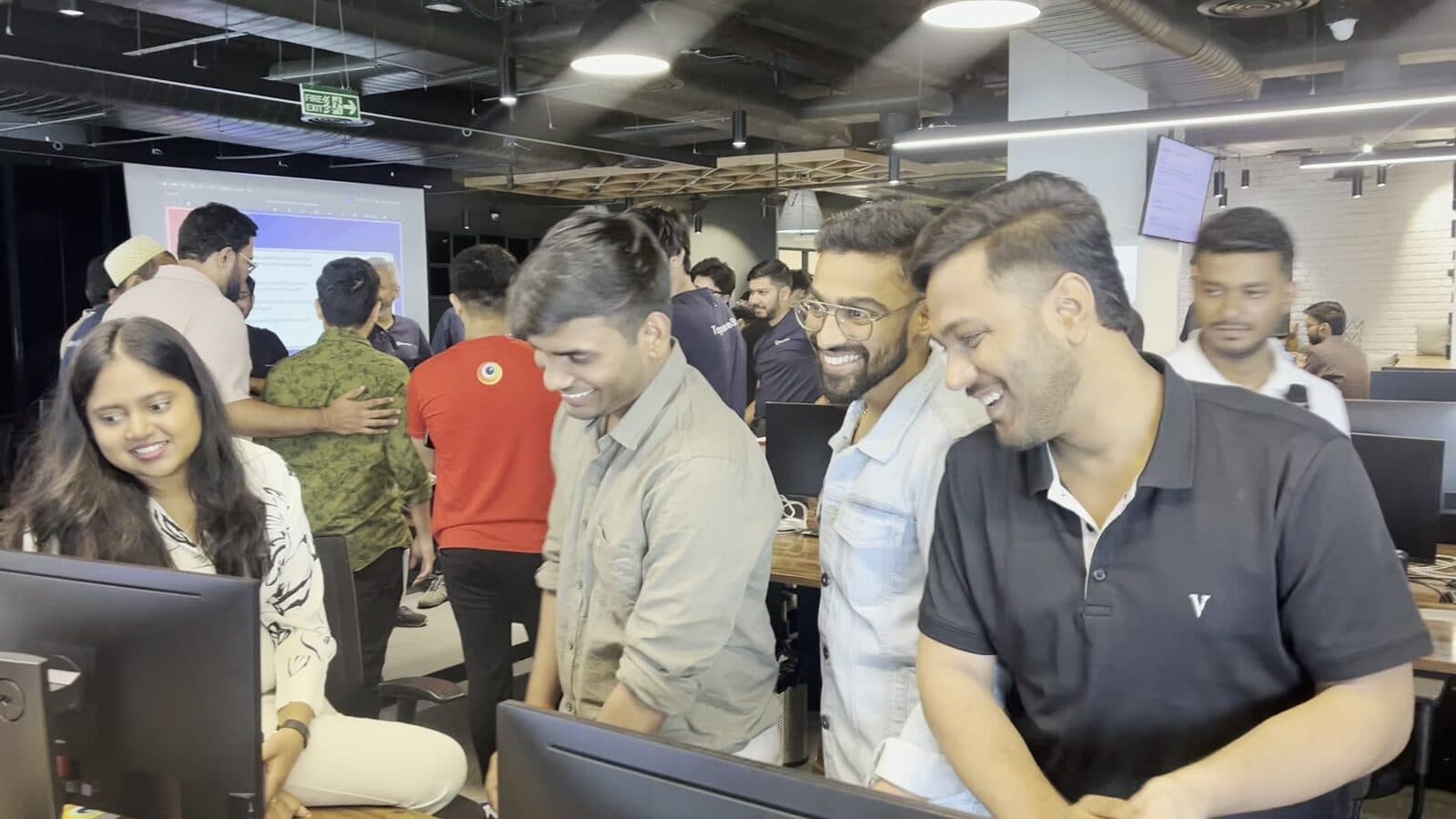
Planners often ask whether they need to find a venue before they call a team building company. If your group fits a room you already have, you don't. Six in ten of our events run in a hotel or conference venue, often because the event sits inside a meeting that's already booked there. A quarter run in the client's own office, in a conference room, a cafeteria or an open office floor. The rest are in restaurants, retail spaces, schools and, now and then, a park.
The office is the cheapest room you'll ever book, and it works for anything that fits on tables. Game shows, tabletop competitions and most charitable builds all do. A hunt needs even less: a City SmartHunt® starts and finishes in your building, and the route in between is the city.
We assign a lead facilitator near your city, and the facilitator brings the staff and the materials. What you arrange is access to the room, the tables and chairs, and the screen and sound described below.
What we don't do: venues, food and off-site volunteering
We don't book venues, arrange catering or take groups off-site to volunteer. We run the program in the space you have, around the meal you've planned, and on charitable programs the charity comes to you.
These are the three answers that most often surprise a first-time buyer, so it helps to know them before the first call. If you need a room, start with your hotel's meeting space or our venue pages by city, then bring us the room you've chosen. If you're serving lunch or dinner, the caterer is yours. We recommend running the program after the meal, once the tables are cleared, so nobody is building a bike between plates.
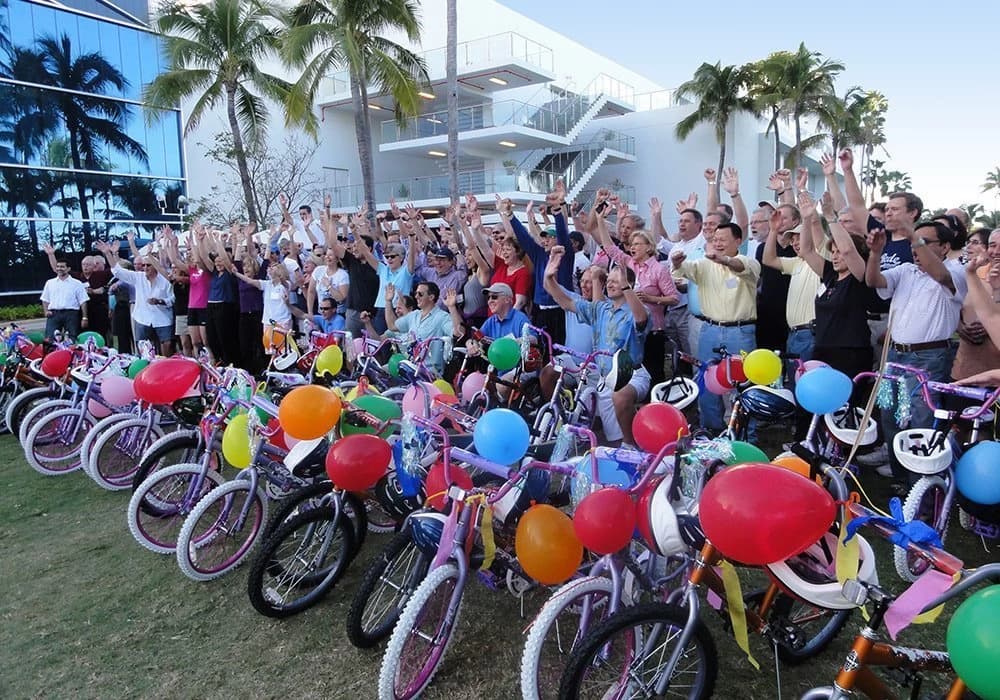
Charitable programs work the other way round from a volunteer day. Your team builds the bikes or care packs in your own room, and the donated items go to a local nonprofit at the end of the event. In many cases a representative from the charity comes to the room to accept them. Nobody boards a bus to a warehouse.
The cost guide lists what the program price covers and what it doesn't, line by line.
How much space you need
Plan on 25 square feet per person for game shows, tabletop competitions and most charitable builds, 30 to 40 for team challenges that build something big, and 50 for programs with a station rotation.
Multiply the figure by your headcount and you have the floor you need. A 40-person game show needs about 1,000 square feet. A 100-person Bike Build Donation® needs about 2,500, and the same 100 people playing Team Olympics need about 5,000. The figures are the ones on each program page, and they assume walking room between tables.
Set one table per team, with or without chairs, plus one or two supply tables for our staff. Teams run from four to six people in Jeoparody Live! up to twelve to fifteen in Team Olympics, so the program sets how many tables you need. A host on a stage needs a riser in a big room. Bridge to the Future needs fifty feet of clear floor for the finished span.
If the room is tight for the headcount, send us its dimensions before you rule it out. We adapt layouts to smaller rooms, and a group can also go through in waves.
| Format | Programs | Square feet per person | Length | Indoor or outdoor |
|---|---|---|---|---|
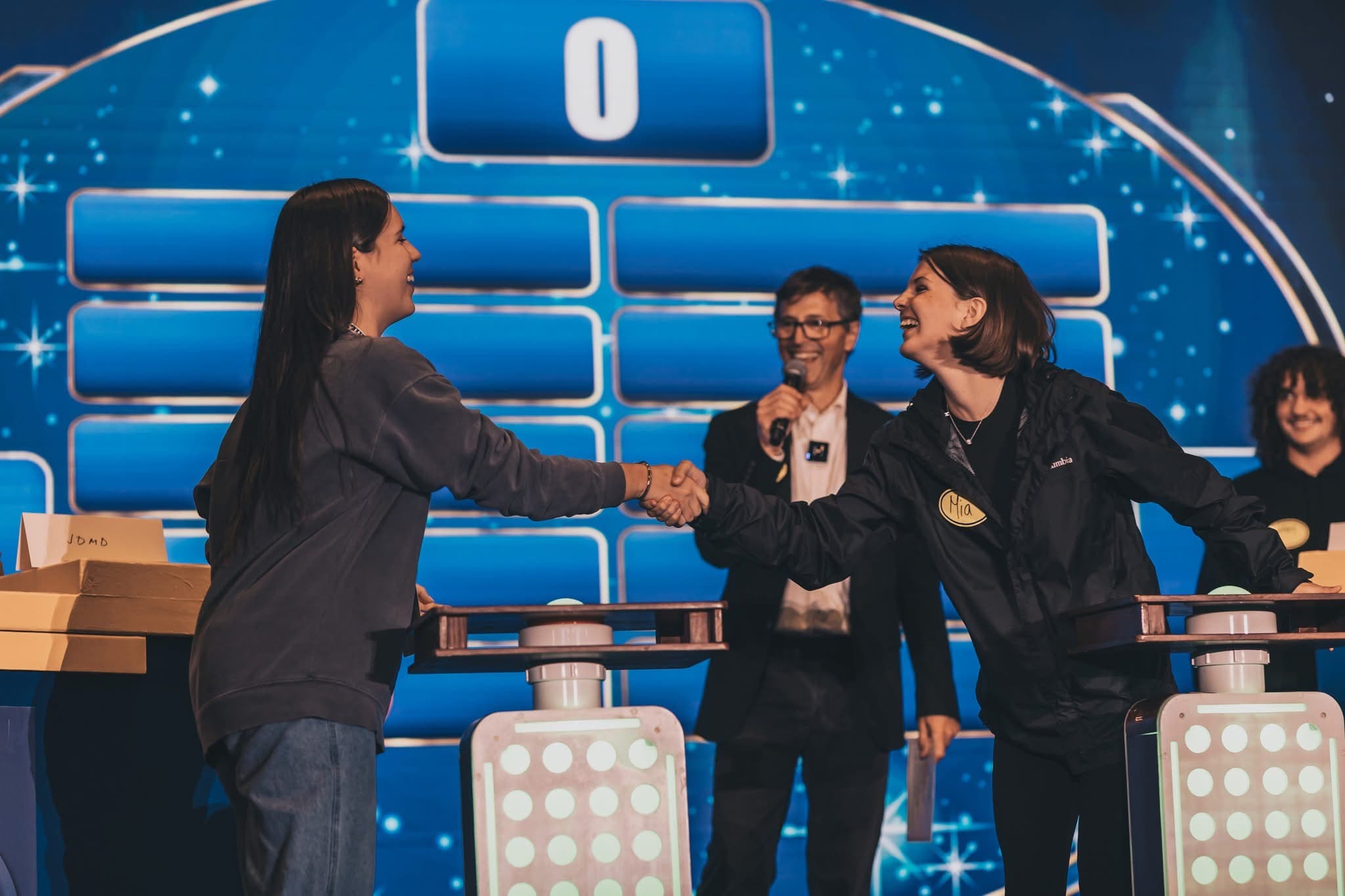
| Game shows | Best Corporate Feud, Jeoparody Live!, Trivia Blast Live! | 25 | 1 to 1.5 hours | Indoor; Trivia Blast Live! also outdoors |
| Tabletop competitions | A Minute 2 Win It!, Momentum, The Greatest Showdown | 25 | 1.5 to 2 hours | Indoor; most also outdoors |
| Food builds | Chocolate Architect, Gingerbread Architect | 20 | 1.5 to 2 hours | Indoor |
| Charitable builds | Bike Build Donation®, Build-a-Guitar®, care packs | 25 | 1.5 to 2.5 hours | Indoor; most also outdoors |
| Charitable mini-golf | Mini-Golf Build and Food Donation, Putting for Pets | 35 | 1.5 to 2 hours | Indoor or outdoor |
| Team challenges | Catapult, Pipeline, Competition to Collaboration® | 30 | 1.5 to 3 hours | Indoor or outdoor |
| Bridge building | Bridge to the Future | 40 | 2 to 2.5 hours | Indoor or outdoor |
| Station rotations | Team Olympics, Corporate Survivor | 50 | 1.5 to 2 hours | Indoor or outdoor |
| Scavenger hunts | City SmartHunt®, Amazing Chase SmartHunt® | A room to start and finish in | 2 to 2.5 hours | Indoors and out |
| Workshops | DiSC Workshop, Emotional Intelligence Training | Classroom style or rounds, by group size | 3 to 4 hours | Indoor |
Screen, sound, Wi-Fi and phones
Nobody downloads an app. Teams play in a phone's web browser on Wi-Fi or cell data, game shows need a screen and a sound system, and above 50 people the host needs a microphone.
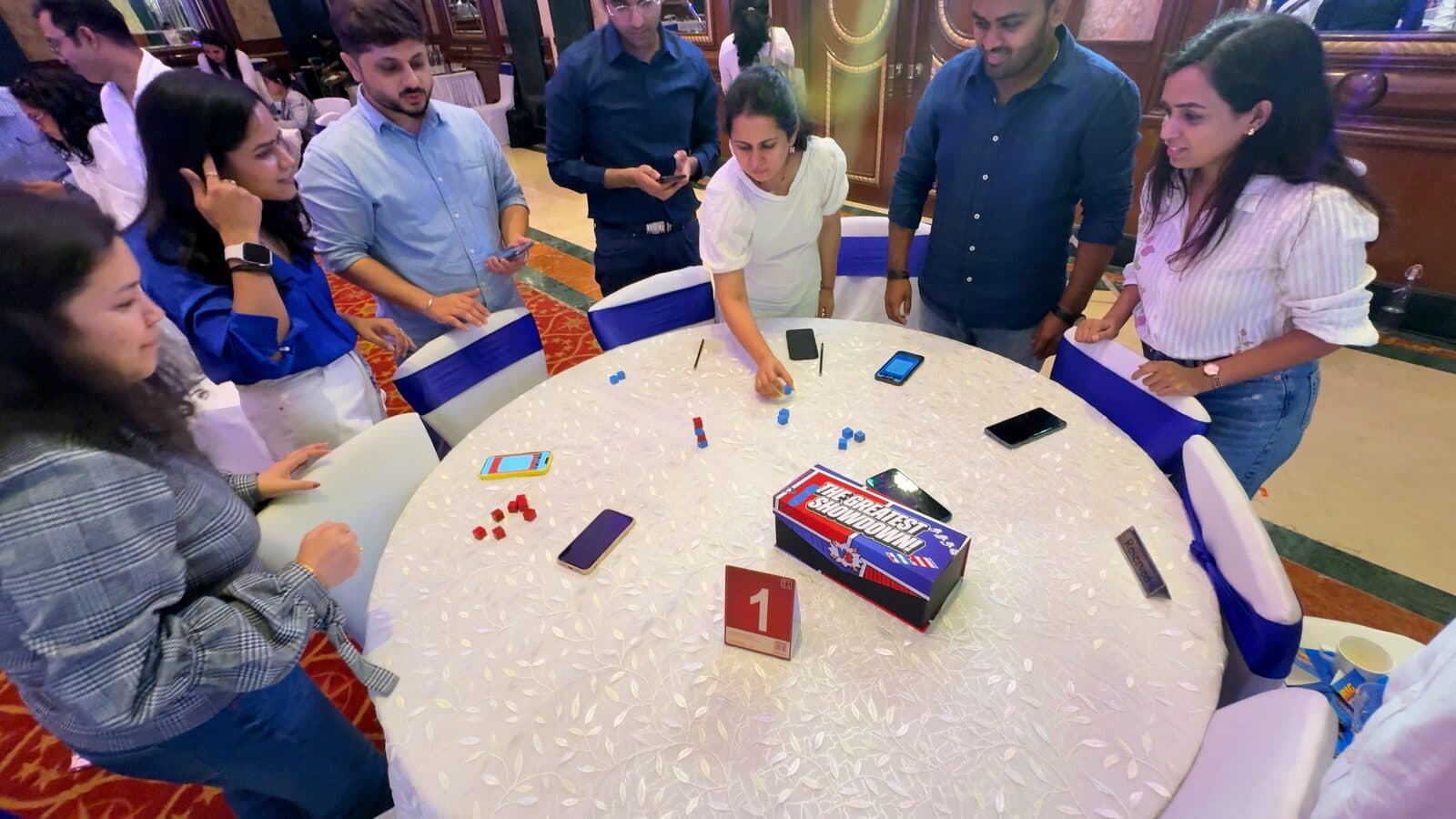
Most of our in-person programs include timed challenges played in a browser. A team member scans a code or opens a link, and the team's answers and points go to a live leaderboard. That takes Wi-Fi or good cell reception in the room, and a phone on some of the people at each table. The Greatest Showdown is the exception: everyone votes on their own phone, so ask the group to arrive with them charged. Where a program uses tablets, we bring them.
The screen is for the leaderboard, the game board and, at the end, the photos. Game shows need a projector and screen, and Best Corporate Feud also needs a sound system for the host and the sound effects at any size. Builds and tabletop programs use a display screen for scoring. A hunt needs a screen and audio only where the teams finish, for the closing slideshow.
Sound depends on the headcount. Under about 50 people, a facilitator's voice carries in most rooms. From 50 up, the program pages ask for a microphone and speakers, and Team Olympics, which spreads out across a floor or lawn, asks for a sound system from 100. In an office, the conference room's screen often covers it. In a hotel, put the sound and the screen on the venue contract, because the house system can be a single ceiling speaker.
- A screen or projector the back row can read
- A microphone and speakers for groups of 50 or more
- Wi-Fi the group can join, or good cell reception in the room
- Phones charged, at least a few per team (one each for The Greatest Showdown)
Setup, outdoor plans and the day itself
Our staff arrive before your group, set the tables and materials, run the program from start to finish and pack everything out. Book the room for the program's length plus setup and teardown time.
Your program manager confirms the setup and teardown window with you or the venue ahead of the date, along with the floor, the elevator and where to park. For a build, that includes where the materials arrive and how the donated items leave the room.
On the day, the program follows the same shape whatever the format. It opens with an icebreaker and a walkthrough from the lead facilitator. Teams form, at random or from a list you send in advance, then play the timed challenges and the build or competition. It closes with the winners, gold medals and, on a charitable program, the handoff to the charity. Your group's only job is to show up. If some of the team works remotely, they can join the same game by video.
Outdoor programs need an indoor space of comparable size booked at the same time. Our program pages for outdoor formats list it as a requirement, and the go or no-go call happens the night before or the morning of the event. A lawn works for a station rotation, with the cafeteria or a meeting room as the fallback.
Sources
- Best Corporate Events program pages: group size, team size, length, setting, space per person and tech requirements for each program
- Best Corporate Events, signed event records, January 2023 to September 2026 (share of events by venue type)
- Best Corporate Events, The Greatest Showdown: what to provide