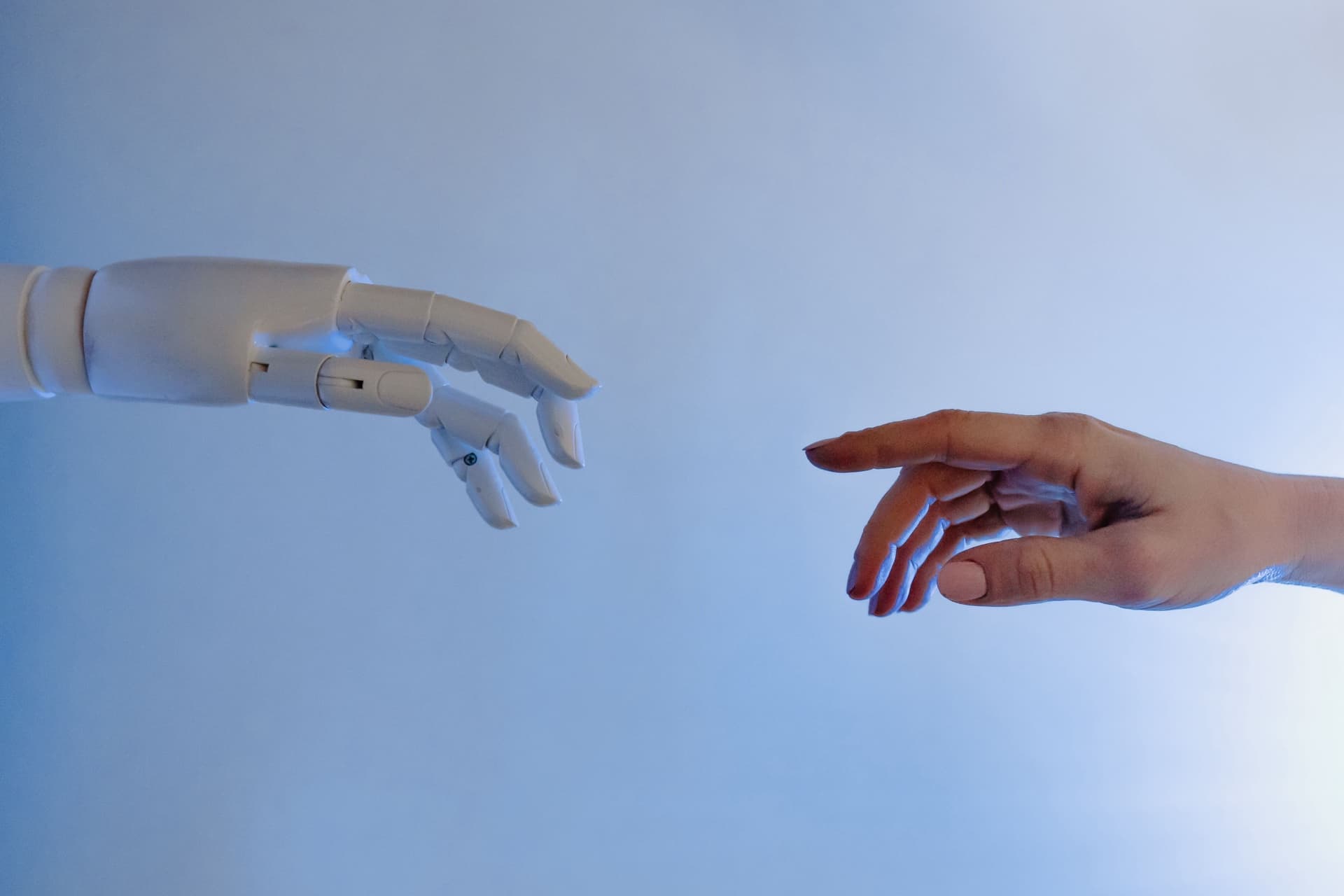
The ongoing deluge of headlines predicting extensive, widespread job losses due to AI has workers understandably concerned about their futures. And it’s putting pressure on business leaders at all levels to cut headcount or be left in the dust by competitors who slash labor costs more aggressively. But recent developments suggest that both the real story and the best strategy may be more complex.
In many cases, companies that cut jobs in the belief those roles could be filled by AI have reversed course and hired back employees. As author and keynote speaker Pam Didner recently wrote in Inc. Magazine:
“Companies that cut jobs and blamed AI are quietly hiring those people back. Forrester reports that 55 percent of employers already regret those cuts…(and) Gartner (predicts) that half of AI job cuts will be reversed by 2027.”
Why? Because most jobs are more than just a series of tasks that can be automated. They involve judgment, creativity, collaboration, and other human skills that AI can’t duplicate.
Here’s a look at the AI jobs debate; why AI is unlikely to lead to large-scale job elimination; and how leaders can make their organizations both more efficient and better places to work for human employees.
The Pessimistic Case: AI Will Take All of Our Jobs
While this is unlikely (for reasons detailed in the next section), there have been no shortage of doom-and-gloom, “AI jobpocalypse” stories in the news. Here’s a quick look at recent examples.
“AI and automation could eliminate nearly 100 million jobs in the U.S. in the next decade,” according to Axios. Per Microsoft’s AI CEO Mustafa Suleyman being quoted, somewhat skeptically, in Futurism, “Virtually all white collar tasks will be automated within a year and a half.” And Fortune reports, “The scientist who helped create AI says it’s only a matter of time before every single job is wiped out—even safer trade jobs like plumbing.”
Finally, Fast Company adds:
“If entry-level consulting or finance jobs have always been difficult to land, they’re even harder to get now...Anthropic CEO Dario Amodei said AI could wipe out roughly 50% of all entry-level white-collar jobs within five years—absorbing the data entry, basic analysis, and research synthesis that used to be a new graduate’s first rung on the ladder.”
The Optimistic Case: AI Will Actually Create More Jobs Than It Eliminates
Relax, don’t panic, AI will be great for the job market according to an increasingly persuasive counternarrative. For every Mustafa Suleyman or Dario Amodei painting a bleak future, there’s a Jensen Huang or Jeff Bezos presenting a much rosier outlook.
Here are a few examples of this more optimistic forecast.
As reported by Fortune magazine, “Nvidia’s Jensen Huang says AI is killing tasks not jobs—and the white-collar bloodbath narrative gets the future of work ‘exactly backwards’...Companies will use AI’s productivity gains to expand what they produce rather than cutting workers.”
Axios explains, “AI is going to change the way people work, but it’s not going to replace them en masse, according to new research from MIT...This directly pushes back on fear-based narratives coming from some AI leaders...AI is advancing across the workforce more like a ‘rising tide’ than a ‘crashing wave’ — meaning work will change broadly and gradually, not through sudden job wipeouts.”
According to the team at Silicon Valley venture capital firm Andreessen Horowitz, “The ‘AI job apocalypse’ is a complete fantasy...If there is a fixed amount of useful work that needs doing, then if AI does more, humans must do less. The problem with that premise is that it defies everything we know about people, markets and economics. Human wants and needs are anything but fixed.”
The Wall Street Journal reported that, “Employers have singled out AI in recent years as a reason to cut back on hiring college graduates. Now some companies are flipping that narrative, saying AI is boosting their need for entry-level workers. In one of the biggest surveys on employers’ graduate hiring plans this year, nearly three times as many executives at companies using or exploring AI said they were increasing junior-level hiring in 2026 than cutting back. Those using AI most extensively were the most bullish.”
And finally, per Amazon founder Jeff Bezos in Dagens.com, “Artificial intelligence isn’t going to make humans redundant; it is going to create a severe shortage of them...He specifically dismissed displacement fears for highly skilled professionals like software engineers and radiologists, arguing that humans possess an ‘endless’ list of things they want to accomplish. By lowering technical barriers, AI will unleash a massive wave of new projects and industries, drastically increasing the global demand for human effort.”
The Realistic Case: AI Will Change Jobs Rather Than Replacing Them
AI has already eliminated some jobs in fields like marketing, software development, and management consulting, particularly for recent college graduates. But it’s also created more than a million new jobs with titles like AI Engineers, Forward-Deployed Engineers, and Data Annotators.
Only time will tell what the net effect of AI is on the job market over the next five or 10 years. What is undeniably true is that it’s already changing the way virtually all white-collar professionals work. Across job functions, people are using AI to answer questions, take and summarize meeting notes, analyze large data sets, and automate repetitive tasks.
Why AI Will be a Helper, Not a Replacement
AI is changing jobs by expanding the capabilities of individual workers and freeing them from time spent on low-level, repetitive technical chores. It can replace tasks, but in most cases not entire jobs, because it’s not human.
As Axios explains this, “AI amplifies human creativity, but what makes brands and people successful will never be replicated by AI.” AI can amplify content, but it can’t replace creators because it can’t duplicate human creativity, judgment, or authenticity.
Jorge Lucena, writing for Flaunt, expands on that idea: AI “makes human creativity even more valuable. AI excels at recognizing patterns. Creativity is recognizing opportunities that don’t yet fit a pattern. It’s the perspective, insight, or angle that makes someone stop and pay attention.
“AI is already improving repetitive and data-heavy areas of marketing, including research, campaign analysis, segmentation, (and) reporting…What AI cannot determine as reliably is which ideas are worth pursuing…The value of creativity is shifting away from manually producing assets and toward judgment, taste, positioning, and original thinking.”
How Organizations Can Make the Most of AI and Their People
AI can both increase productivity and expand the boundaries of what employees can accomplish. But for enterprises to thrive in this new world, their people will need to thrive as well. Leaders need to flip the script on justified employee fears about AI in the workplace.
When workers are stressed by unclear or unrealistic demands and expected to master technologies that may replace them, the workplace happiness and employee wellbeing that are essential to building strong teams suffers.
Leaders need to reassure employees that embracing AI will enhance their careers, not threaten them. Where workers view AI as helpful technology that expands their opportunities, companies can build high-performance workplace cultures that effectively utilize both emerging technology and human talent.
Here are four ways to optimize the combination of AI technology and human capacity.
Encourage Employees to Ask Questions and Experiment
Cristina Mancini, CEO of Black Girls Code, writes that many employees are struggling to keep up with the pace of rapidly evolving AI technology but are made to “feel ashamed for their lack of understanding” and afraid to ever say “I don’t know.”
She points to recent research finding that “only 39% of people globally who use AI at work have gotten AI training from their company.” When workers feel pressured to use tools they don’t understand, the risk is they may over-rely on AI and apply less of their own judgment.
That can lead to communication breakdowns (letting AI write emails and create slide decks without sufficient human review); excluding qualified job candidates in HR; publishing content with AI hallucinations in place of facts; and much more.
To prevent this, Mancini advises, “The best leaders see gaps as opportunities to ask good questions.” She points to specific examples of where this less stressful approach has paid dividends:
“JPMorgan created low-stakes spaces for managers to experiment with AI, encouraging leaders to admit when they were stuck. That openness built trust and sped up adoption. Johnson & Johnson encouraged broad experimentation across business units, generating nearly 900 AI / generative AI use cases across research, supply chain, commercial, and internal support. The result? An internal chatbot for employees and a fresh approach to making clinical trials more representative.”
Automate Tasks, Not Jobs
Pam Didner details how companies can make effective use of AI, and reassure stressed-out employees, by focusing on how agentic AI can automate repetitive workflows rather than replacing workers.
She writes that, “Building true AI fluency means you have to get past the PowerPoint level. That starts with walking a single workflow—like a sales process or a content pipeline— end-to-end and marking who or what owns each step. That’s how you stay out of the reversal statistics. The map is already sitting in your operations, yet almost nobody opens it. The devil is always in the details.
“Start with the work, not the strategy…Walk one process end-to-end—a proposal, a sales follow-up sequence, a customer onboarding flow. At each step, note what triggers the next action, who or what performs it, and what judgment it takes to move on.”
That judgment is vital, and only your experienced, human employees can provide it. To automate tasks in this manner, employees will need to be fully open, transparent, and cooperative in mapping these workflows to turn over to AI. Assuring them that AI will be used to help them, not replace them, will win their trust.
Develop Leaders for the Age of AI
Micromanagement has never been an advisable approach and always a sign of bad leadership. But in the age of AI, it’s disastrous. Leading AI-empowered teams isn’t about control, but rather encouragement, development, and vision.
Writing about the real purpose of leadership, Alan Fleischmann, founder and CEO of the global CEO advisory firm Laurel Strategies, contends:
“Tomorrow’s leaders will need more than intelligence alone. They will need Emotional Quotient (EQ), Trust Quotient (TQ), Work Ethic Quotient (WQ), and Vision Quotient (VQ), along with the disciplines of directed curiosity, directed optimism, directed courage, and directed gratitude…
“Real leaders do more than build organizations. They recognize potential, provide guidance, share knowledge, invest resources, and help others see possibilities they may not yet see for themselves.
“Artificial intelligence makes this challenge more urgent, but it is not the central challenge itself. AI will reshape nearly every profession, industry, and community…Every business leader should ask not only how AI will improve productivity, but how it will expand human potential.”
No one knows the minute details of a job better than the person doing it. It’s the duty of the leader to help that employee map business processes, determine where to apply AI automation (and where human judgment or intervention is essential), envision new ways to use AI in their role, and get the training needed to be fluent and confident in the technology.
Inc. magazine columnist and AI ecosystem builder Ash Kumra expands on these leadership ideas, writing:
“Recent data from Microsoft and LinkedIn reveals a fascinating reality. While AI is automating execution, leaders are aggressively prioritizing soft skills like emotional intelligence. As tools become more artificial, humans crave the authentic.
“The ultimate competitive moat is no longer technical execution. It is the ability to forge genuine human connection. If you are a founder or an executive, community building fueled by high emotional intelligence is the single most important leadership skill you must master…
“Your team doesn’t want a flawless manager who acts like an algorithm. They want a leader who understands their anxieties about the future of work. They want someone who can build a safe environment where it is acceptable to experiment, fail, and learn together. Empathy is the engine of psychological safety, and psychological safety is the engine of true innovation.”
Leadership development programs like Igniting Team Performance® are one key element in growing leaders for today’s business environment.
Understand the Role of AI in Innovation
The rapid evolution of AI is both pressuring firms to innovate faster and, potentially, supporting those accelerated innovation efforts. But using AI effectively to help with new product development requires an understanding of where AI can help and where it can actually impede progress.
In the Harvard Business Review article Research: The Innovation Problems AI Can’t Solve, the authors note that:
“Every innovation team now has the same tools: the same foundation models, similar prompt libraries. Yet the results are wildly uneven. Some teams report a creative renaissance while others report a flood of homogenized, forgettable ideas that all sound like they came from the same person.”
They detail four bottlenecks in the innovation process and how AI can be used, and mis-used, at each of these stages:
- Ideation: Over-fixating on the typical.
- Screening: Biasing toward more “polished” LLM ideas.
- Consumer Insight: Faster research, less authentic answers.
- Diffusion & Market Learning: Same confirmation bias, with a more persuasive voice.
For example, in the ideation phase, “When people brainstorm with an LLM without a deliberate structure, two things happen simultaneously. The model itself gravitates toward the statistically typical response—after all, it was trained to autocomplete phrases by using the most likely next words. And once a person reads that typical response, they become fixated on it, preventing them from thinking of the more unusual ideas they might have generated unprompted.”
Because AI is predictive, it’s terrible at coming up with new ideas. “Innovations” suggested by AI are often the most obvious solutions. Only humans are truly creative. Organizations that use AI effectively in their new product development processes will get a faster workflow without losing uniquely human insights.
The Roles of Team Building and Professional Development in AI-Empowered Organizations
As noted above, traits like EQ, trust-building, and vision will be increasingly important leadership qualities as AI advances in the workplace. Those whose work involves directing the activity of others will need to learn to be leaders, not just managers.
Fortunately, professional development training can help organizations instill and cultivate the key qualities of exceptional leaders among their management ranks. This ongoing education will help today’s managers adapt to the challenges of overseeing the work of both people and AI agents.
For non-management employees, the challenges are separate but similar. Automating a simple task like analyzing a data set or creating a slide deck only requires training in using AI tools. But building out agentic AI workflows for more complex business processes requires analyzing and coordinating that work with others. Building human skills like communication, collaboration, creativity, innovation, and problem-solving is essential.
In addition, working with AI tools all day long can be isolating. Fun team competition and bonding activities bring employees together to build strong workplace relationships while enhancing key interpersonal skills.
Here’s a look at some specific program ideas for each group.
Professional Development Workshops for Managers
For new or early-career managers, programs like our Essential Supervisory Skills workshop and Manager’s Guide to Business Coaching improve their employee feedback and development skills using proven communication techniques.
Given Alan Fleischmann’s comments about EQ, a great option for managers at any level is our Emotional Intelligence Training. This workshop helps participants strengthen self-awareness, manage emotions more effectively, improve communication, and build stronger, more trusting workplace relationships.
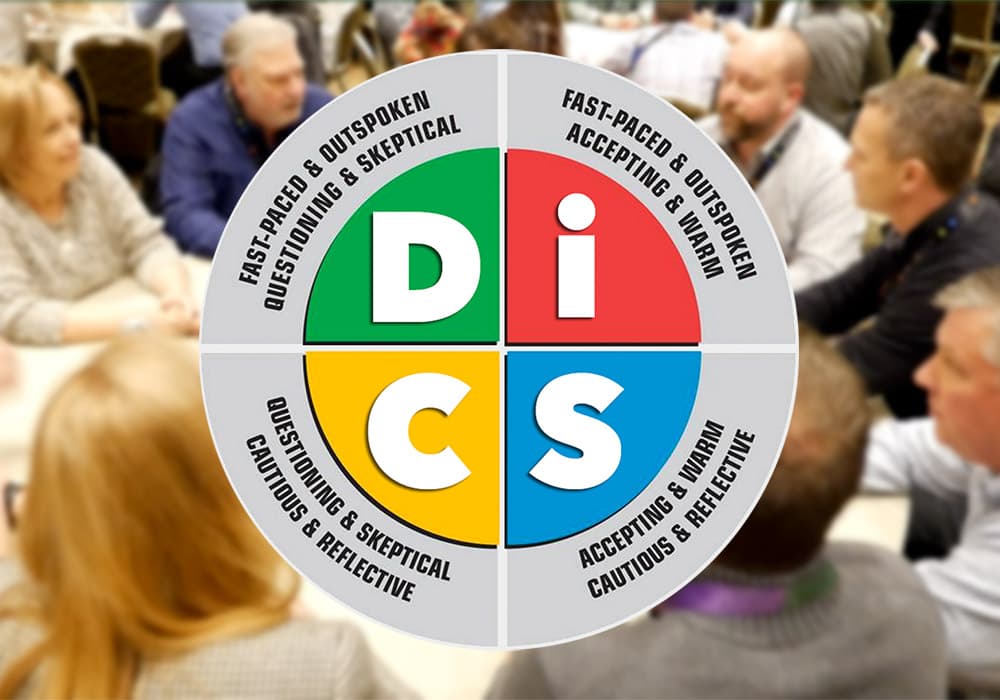
And for managers and their teams alike, personality assessment programs like our DiSC Workshop, Myers-Briggs Type Indicator (MBTI) Training, and Belbin Behavioral Assessment help team leaders and members understand individual strengths, behavioral styles, and communication preferences, making it easier to determine where human skills can best complement AI capabilities. As AI changes workflows and responsibilities, that greater self-awareness and mutual understanding can help teams adapt roles, communicate through change, reduce friction, and collaborate more effectively.
Team Building Programs for Everyone
As AI handles more routine work, employees more than ever need to communicate ideas, solve unfamiliar problems creatively, coordinate different roles, and collaborate toward an outcome. Fun team building programs like Momentum (where participants design and build a Rube Goldberg-style chain reaction machine to accomplish a simple task) and our Build-a-Raft Competition exercise all four skills in a very tangible way.
Virtual escape rooms and murder mysteries like Mavericks on the Case and our Virtual Treasure Hunt Trilogy challenge participants’ collaborative problem-solving skills—exactly the skills they will need to collaboratively develop complex agentic AI workflows. And because they are virtual, these programs are ideal for remote and hybrid work teams.
Finally, charitable corporate social responsibility (CSR) team building events combine the core pillars of professional team building with giving back to the community. Programs like our Bike Build Donation® and Build-a-Guitar® help disadvantaged kids; Mini-Golf Build and Food Donation supports local food banks; and Operation Military Care provides care packages for service members.
Other CSR programs help groups and individuals from the homeless to students, people with mobility challenges, cancer patients, foster kids, pet shelters, and more. All of these activities combine enhancing communication and collaboration skills with a powerful shared emotional experience.
Final Thoughts on the Importance of Developing People Skills in the Age of AI
With so many news headlines trumpeting the specter of widespread job losses to AI, employees—particularly those just getting started in their professional careers—are understandably anxious about the impacts of this technology.
Managers are facing new challenges as well, from mitigating employee stress and concerns to learning to coordinate the activities of both human employees and AI agents.
The companies that will thrive in the coming years will focus on the use of AI as a means to expand the capabilities and opportunities for employees rather than a tool to replace them. They will create safe and supportive environments where employees can embrace AI rather than fearing its impact, leading to both higher productivity and greater innovation.
Professional development training can help managers improve their vital human skills in this rapidly evolving new work environment. Team building programs can help employees communicate and collaborate more effectively, skills that will be vital as AI increasingly takes over mundane technical tasks while work becomes more human.
Curious about how we can help your organization adapt in these challenging times? Contact Best Corporate Events to start a conversation. We’ll show you how our wide range of programs and deep expertise can help with your specific goals and situation.