How long each kind of program runs
The format sets the length. A game show runs an hour to 90 minutes, most builds and competitions 90 minutes to two hours, a scavenger hunt two to two and a half hours, and a training workshop three to four hours.
Every program page on our site lists a length, and the table below groups them by type. Two in three of our in-person programs list a length between 90 minutes and two and a half hours, and about half list exactly 1.5 to 2 hours. That window gives teams time to form, play the main challenge and finish with awards or a donation handoff, and it still fits an afternoon block.
The outliers sit at both ends. Morning Jumpstart, an energizer for the start of a meeting, runs 20 to 60 minutes. The professional development workshops (DiSC, Myers-Briggs, Emotional Intelligence and most of the others) take three to four hours, and two of them, Conflict Resolution Training and the Manager's Guide to Business Coaching, take a full day.
Online programs run shorter. All of our virtual game shows list 60 to 75 minutes, and the virtual escape rooms an hour to 90 minutes. The virtual workshops are the exception, and the longer ones are usually split across sessions.
| Program type | Listed length | Across the catalog | Programs to look at |
|---|---|---|---|
| Energizer | 20 to 60 minutes | One format, in person or online | Morning Jumpstart, Virtual Morning Jumpstart |
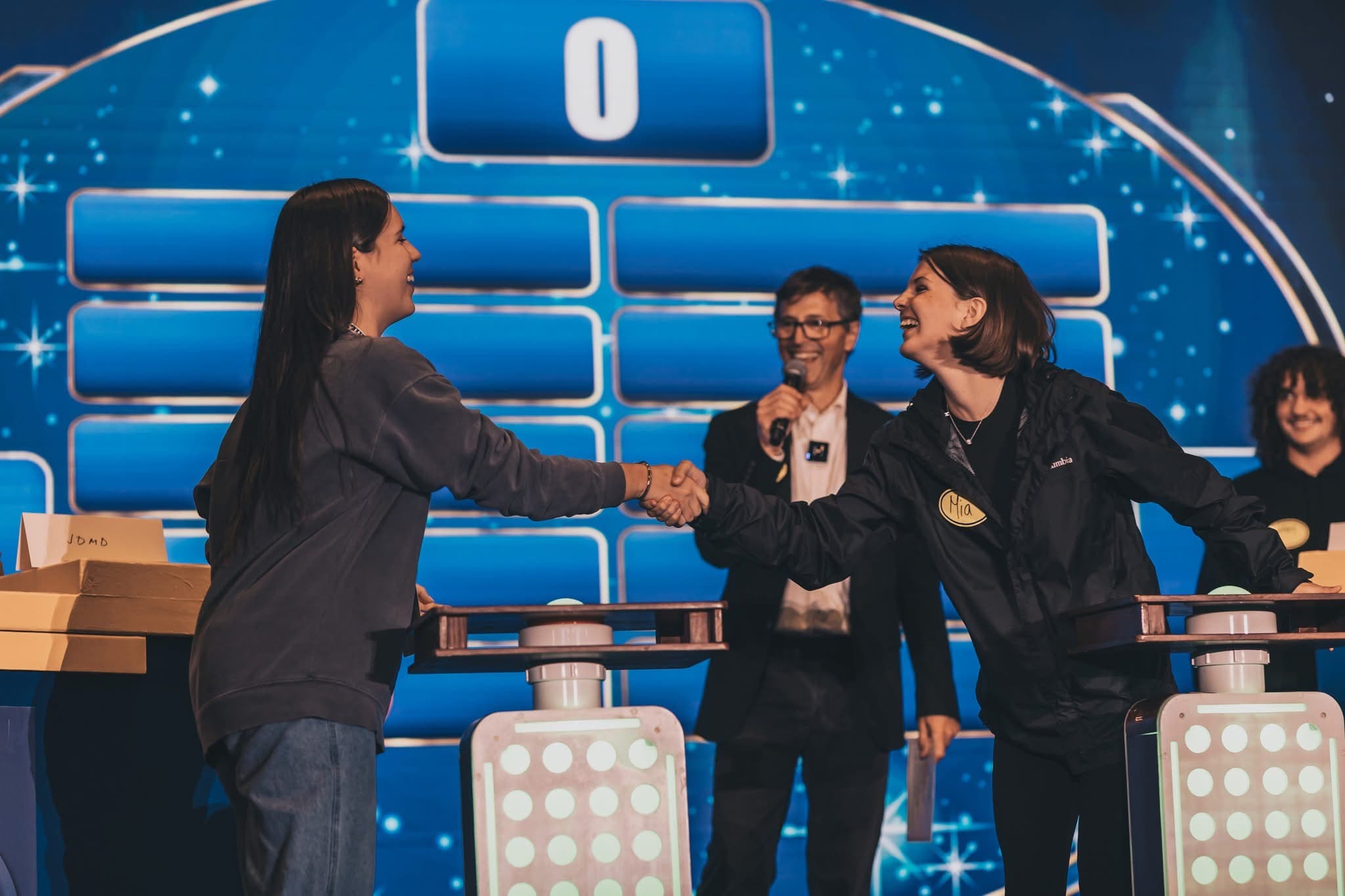
| Game shows, in person | 1 to 1.5 hours | All six | Best Corporate Feud, Jeoparody Live!, Trivia Blast Live! |
| Competitions and challenges | 1.5 to 2 hours | 16 of 25; the longest, Competition to Collaboration, runs 2.5 to 3 | A Minute 2 Win It!, Team Olympics, Crack the Case! |
| Charitable builds | 1.5 to 2 hours | 21 of 26; Build-a-Guitar and Build-a-Band run 2 to 2.5 | Bike Build Donation, STEM Backpacks for Kids, Build-a-Guitar |
| Scavenger hunts | 2 to 2.5 hours | All three SmartHunts | City SmartHunt, Amazing Chase SmartHunt, Locate & Donate SmartHunt |
| Cooking competitions | 1.5 to 2 hours | 2 of 3; Food Truck Face-Off runs 2 to 2.5 | Fiesta Fun!, Tapas and Sangria Making |
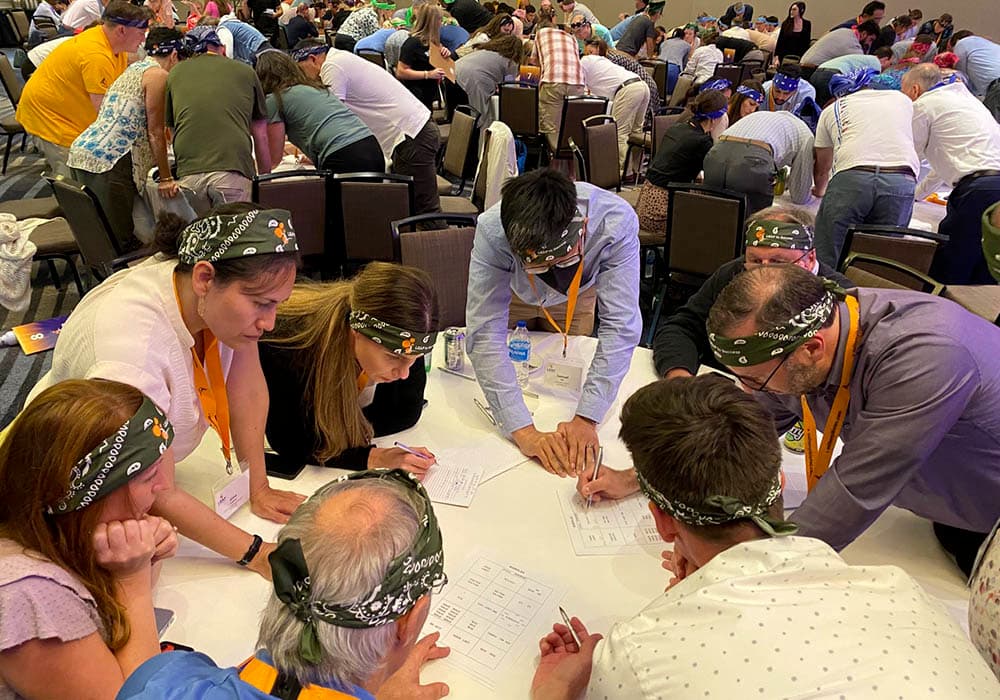
| Workshops, in person | 3 to 4 hours | 10 of 17; two run a full day | DiSC Workshop, Myers-Briggs (MBTI) Training, Emotional Intelligence Training |
| Virtual game shows and trivia | 60 to 75 minutes | All 17 (one lists about 75 minutes) | Virtual Best Corporate Feud, Virtual Trivia Blast!, Virtual Jeoparody! |
| Virtual escape rooms and mysteries | 1 to 1.5 hours | All 10 | Virtual Escape Room: Escape the Office, Virtual Murder Mystery: Mavericks on the Case |
| Virtual workshops | 60 minutes to 9 hours | 5 of 13 run 60 to 90 minutes; the longest lists 3 to 9 hours | Virtual Meetings Tune-Up, Virtual DiSC Behavioral Assessment |
Where the time goes, and the shortest version
Every program has three parts: a warm-up that forms the teams, the main challenge, and a finish. The main challenge is the part that stretches or shrinks.
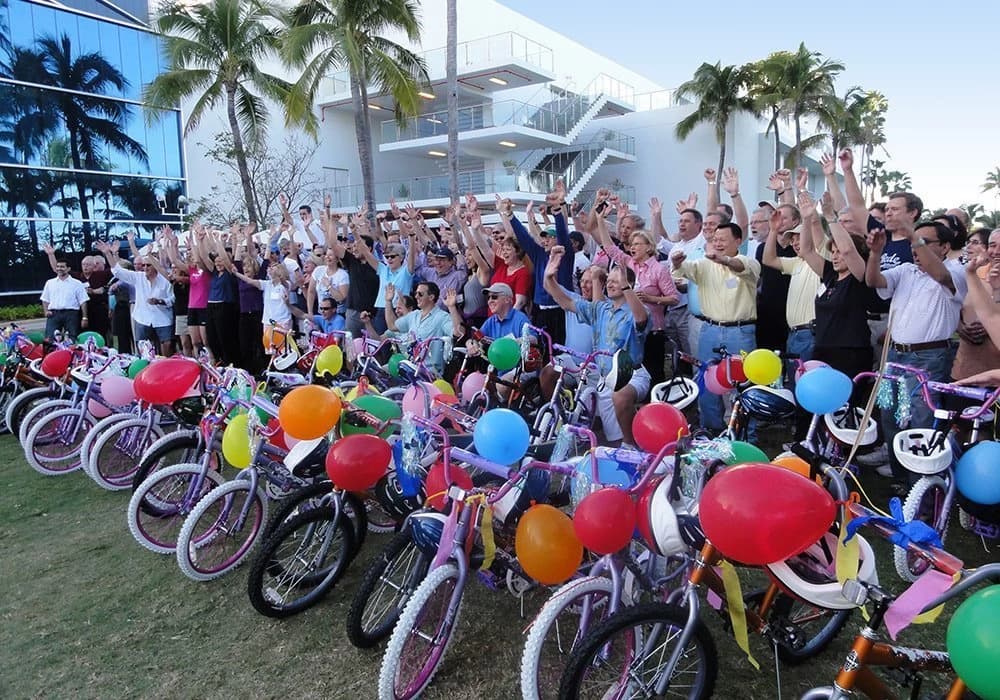
A Bike Build Donation shows the arc in 1.5 to 2 hours. It opens with an icebreaker and a walkthrough from the lead facilitator, moves into the challenges where teams earn their bike parts, and ends with the safety checks, notes of encouragement and a group photo (add a little time if you want the bike parade). A scavenger hunt spends its first and last 15 to 20 minutes the same way, around one to two hours of hunting.
Planners often ask for the shortest version that still works. The surest answer is a format designed to be short. Our in-person game shows list an hour to 90 minutes, Virtual GuessTeamate lists one hour, and Morning Jumpstart runs 20 to 60 minutes. Virtual Escape the Office has a 20-to-30-minute version alongside the 60-to-90-minute one. Some formats flex the other way: The Greatest Showdown is best at about 1.5 hours, and it can run anywhere from one to three.
The listed length is the time your group spends in the room. Our staff arrive ahead with the materials and set up before anyone walks in. For a build of a thousand people, load-in starts the evening before or early that morning, and the staff brief an hour before doors. Ask the venue for a setup and teardown window when you book the room, and leave a fifteen-minute buffer before the start; the planning guide's run-up lists the rest.
From the City SmartHunt run of show
Fitting it into a meeting, an offsite or a party
Pick the slot first, then the format that fits it: about an hour for an opener or an after-dinner show, two hours for a mid-afternoon block, half a day for a workshop.
Inside a meeting or a conference, the program usually gets one block. An opening session or a break between sessions suits a game show (an hour to 90 minutes) or Morning Jumpstart (20 to 60 minutes). The two-hour block on a middle afternoon is where builds and hunts belong, because they need the floor space and the full window. The large-group guide lists formats for each agenda slot, from the opener to the closing session.
An offsite day has room for two pieces. A three-to-four-hour workshop such as the DiSC Workshop fills a morning, and a 90-minute to two-hour program fills the afternoon, when the room needs something active after lunch.
For a holiday party or an evening event, plan the program around the meal. We don't cater or book venues, so the venue sets the dinner timing, and we usually suggest running the game after dinner, once the tables are cleared. A game show at an hour to 90 minutes fits an evening without taking it over.
Two things change the clock outside the program itself. A hunt that starts away from your venue needs travel to the start and back, so add that to the 2 to 2.5 hours. A charitable build adds no travel at all: the charity comes to your room to receive the donation, and we don't take groups off-site to volunteer.
Does a bigger group take longer?
Rarely. Most programs list the same length for 30 people as for 1,000, because every team plays at the same time.
A Minute 2 Win It! runs 1.5 to 2 hours for groups of 30 to 1,000 and up, and each team plays its own table at once, so nobody waits for a turn. A Bike Build Donation keeps the same 1.5-to-2-hour agenda for a large group; it adds facilitators and a bigger bike shop rather than time. A game show runs the whole room from the stage, and for 100 people or more Best Corporate Feud adds audience-response technology.
Size changes the clock in two cases. When the group is bigger than the room, the program runs in waves with a fifteen-minute buffer at each changeover, so the day gets longer while each wave keeps the program's length. And a city hunt for a large group adds bus time to the start and back.
Workshops keep their length at any size. The core Myers-Briggs session runs three to four hours whatever the group, because the content sets the clock.
Sources
- Best Corporate Events, in-person program pages (listed length, group size and setting for each program)
- Best Corporate Events, virtual program pages (listed length for each program)
- Best Corporate Events, City SmartHunt run of show
- Best Corporate Events, Bike Build Donation agenda and large-group FAQ
- Best Corporate Events, How to run team building for large groups (agenda slots, load-in, waves)