
The BEST Moves
Give Them a Case, Not a Stage
A team event the whole room joins, not just the people who love a spotlight. Put a game with a theme at the center, and let everyone play.
3 min read The move is free From Generational Communication Differences
How to run it
You can do all of this yourself, on Monday, without calling anybody.
Book it on the clock, not after hours.
Run it during the workday. An evening or weekend event asks people to give up their own time, and the people who decline are often the ones you most wanted in the room.
Pick a theme everyone plays, not one people perform.
A mystery, a heist, a race against the clock. The theme should give the room a shared story, not hand a few people a microphone. If the fun depends on dressing up or getting on stage, it only works for the people who love doing that.
Put a game in the middle.
A whodunit or an escape room. Something every person plays, so nobody has to perform. The theme sets the mood; the game gives everyone a job.
Mix the teams across ages and departments.
Assign teams of five or six on purpose, so the people who came for the theme and the people who came for the game end up at the same table, working on the same clue.
Watch out: Do not hand out prizes for solo moments. The prize goes to the team that cracks the case. An individual prize rewards the few who wanted the spotlight; a team prize rewards everyone who played.
Why it works
The mechanism, not the marketing.
The generations in your office want different things from a team event. Younger workers lean toward a themed event with something to do, and the older the group, the fewer want one. An event built around performing serves only the boldest people in the first group. A themed game serves both: the theme is there for the people who want it, and the game is what everyone actually does. Mixing the teams by age turns those two groups into one table with one problem to solve, which is the point of a team event in the first place.
“The traditional corporate holiday bash is falling out of fashion as younger workers opt for more meaningful and activity-filled, less alcohol-saturated festivities… (And) more than half of Gen Z and Millennial workers say they’d prefer a themed party with interactive elements (escape rooms, games, etc.)”
Axios, quoted in Generational Communication Differences in the Workplace (p. 21)
Who wants a themed event with something to do
- Gen Z and Millennials
- Over half
- Gen X
- 44%
- Boomers
- 25%
Workers who say they would prefer a themed party with interactive elements, such as escape rooms and games.
Axios, in Generational Communication Differences (p. 21)
Personal time is the one thing every generation agrees on
Most members of all generations prefer to have their personal time respected. That is the case for holding the event on the clock.
Generational Communication Differences (p. 20)
Mix the ages on purpose
Help people of different generations learn from each other in small, multi-generational groups, rather than letting everyone sit with their own cohort.
Generational Communication Differences (p. 22)
Where this move came from
Or take the whole book.
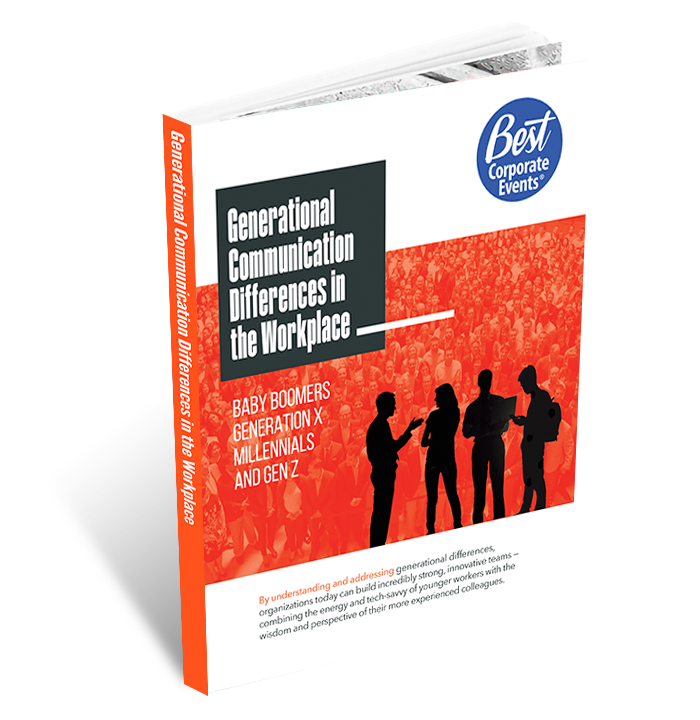
Generational Communication Differences in the Workplace
How each generation prefers to communicate, and seven tips for the room that holds all four.
Send me the eBook
No event in mind yet? Take the reading. PDF straight to your inbox, and a real person follows up — the question at the bottom tells us when that is actually useful.
Activities that do this for you
If you would rather not run it yourself, these are built around the same job.


