You booked the venue. You picked the program. You cleared the calendar. Then the RSVPs trickle in at 40%, and half of those are “maybe.” The gap between a great team building event and how well it’s attended is almost never the event itself — it’s the internal promotion behind it.
Employees don’t opt out of corporate team building events because they dislike their colleagues. They opt out because the invitation didn’t answer the questions actually running through their heads: What is this? How long will it take? Will I be embarrassed? What am I giving up to be there?
This guide covers how to promote team building in the workplace across nine practical steps, plus a four-week communication timeline, channel-by-channel guidance, ready-to-adapt message templates, and the metrics that tell you whether your promotion worked. Whether attendance is optional or mandatory, the goal is the same: people walking in curious instead of resigned.
Why Internal Promotion Determines Team Building Success
Promotion isn’t decoration on top of a finished plan – it’s the part of the plan that determines who shows up and what mindset they arrive in. A well-promoted event starts to work before anyone enters the room.
Strong internal promotion for a corporate team building event delivers five things:
- Higher attendance – more people RSVP, and more of those who RSVP actually appear
- Higher engagement on the day – participants who understand the purpose lean in faster
- Lower anxiety – clear expectations remove the fear of surprises
- Broader participation – with the right marketing, quieter employees are more likely to self-select in rather than out
- Stronger post-event momentum – the story continues after everyone goes home
The reverse is also true. A vague calendar invite titled “Team Activity – Please Attend” primes people to expect an obligation. The way you announce an event teaches employees how to feel about it.
The 4 Reasons Employees Resist Team Building (And What to Say Instead)
Before writing a single announcement, it helps to name the objections you’re actually promoting against. Most resistance falls into four categories, and each one has a specific messaging fix.
1. Fear of Forced Fun
The objection: “This is going to be awkward and I’ll have to pretend to enjoy it.”
What to say instead: Describe the actual activity in concrete terms. “You’ll be building and racing cardboard go-karts in teams of eight” lands very differently than “an afternoon of team bonding.” Specificity replaces dread with curiosity.
2. Workload and Time Anxiety
The objection: “I can’t afford to lose half a day right now.”
What to say instead: State the exact start and end time, and have leadership publicly acknowledge the tradeoff. When a manager says “deadlines shift, this doesn’t,” the permission is real. Vague timing signals the event may run long.
3. Social Anxiety and Introversion
The objection: “I’ll be put on the spot in front of everyone.”
What to say instead: Explain the group structure and the role variety. Noting that participants work in small sub-teams with multiple ways to contribute — building, designing, strategizing, presenting – tells quieter employees there’s a place for them that isn’t a microphone.
4. Unclear Purpose
The objection: “Why are we spending money on this?”
What to say instead: Connect the event to something the team has actually been dealing with – a merger, a reorg, a new hybrid schedule, a rough quarter. Tying the program to a stated team building objective reframes it as an investment rather than a perk.
How to Promote Team Building in the Workplace in 9 Steps
Use these nine steps in order when promoting your next team building event. The first three shape the message, the next four distribute it, and the last two protect attendance and extend the value of the event once it’s over.
1. Lead With the Experience, Not the Logistics
Your first announcement should make someone picture themselves in the room. Logistics matter, but they belong in the second paragraph, not the first line.
Compare these two openers:
- Weak: “On March 14 from 1–4 p.m. we will hold a mandatory team building session in Conference Room B.”
- Strong: “In March, eight teams are going head-to-head to build a working chain-reaction machine. Only one team walks away as champions.”
Name the outcome people will be talking about afterward. Coworkers will learn to collaborate and strategize together through a program like Momentum, where sub-teams design Rube Goldberg-style chain reaction machines, and Bridge to the Future, where teams build a cardboard-and-duct-tape bridge strong enough to hold the entire group.
2. Name the Team Building Program and Link to It
Anonymous events feel like meetings. Named events feel like experiences. Give employees the actual program name and a link where they can see what it looks like.
This single move resolves a surprising amount of resistance, because people stop imagining the worst-case version. Linking directly to a program page from an established team building company — such as Best Corporate Events programs — lets skeptics do their own research and arrive with expectations already set.
3. Build a Four-Week Communication Timeline
One email is an announcement. A sequence is a campaign. Spread your messaging across four weeks so the event builds rather than lands cold. (See the full timeline in the next section.)
The principle behind the sequence: each touchpoint should add one new piece of information — the reveal, the details, the incentive, the reminder — rather than repeating the same announcement louder.
4. Recruit Internal Champions Across Departments
Enthusiasm travels laterally, not vertically. An email from HR is an announcement; a Slack message from a respected peer is a recommendation.
Identify three to five employees across different departments and give them something to work with:
- Early access to the program details before the wide announcement
- A short blurb they can paste into their team channels in their own words
- A specific ask (“Can you get your five-person pod signed up by Friday?”)
- Photos or video or online information about the team building program, if available
Peers are especially effective for reaching employees who skim company-wide email but read their team channel closely.
5. Answer the Logistics Questions Before They’re Asked
Every unanswered question is a reason to decline. Build a short FAQ into your second announcement and pin it where people can find it.
Cover, at minimum:
- Exact start and end time (and whether it is definite that it will end at that time, or if the end time is an estimation)
- What to wear
- Whether food is provided, and how dietary needs are handled
- Physical activity level and accessibility accommodations
- Whether phones and laptops should be left behind
- Who to contact with a private concern
- Parking, transportation, or dial-in details
6. Use Teasers and Micro-Content
Short, curiosity-driven touchpoints outperform long explanatory emails in the two weeks before an event. Options that take minutes to produce:
- A cryptic countdown post (“14 days until someone in this company is crowned champion”)
- A one-question poll (“Which department wins? Vote now.”)
- A 30-second clip from the event provider’s program video
- A leaderboard graphic showing which teams have fully signed up
7. Make Signup Frictionless
Every additional click costs you attendees. Aim for a single-action RSVP.
- Send a calendar invite with the RSVP built in rather than a link to a separate form
- Pre-populate teams where possible so nobody has to find a group
- Set a visible deadline — open-ended signups get postponed indefinitely
- Send one personal follow-up to non-responders; a direct message converts far better than a second mass email
8. Handle the “Is This Mandatory?” Question Honestly
If attendance is required, say so plainly in the first announcement. Discovering it is mandatory after being sold on “a fun optional afternoon” breeds far more resentment than a clear expectation up front.
When an event is mandatory, shift your promotion from persuasion to anticipation. You are no longer convincing people to come — you are shaping how they feel about coming. Emphasize what makes it worth their time, give them agency wherever you can (team selection, activity choice, role preference), and be explicit that participation levels can vary.
9. Promote During and After the Event
Post-event promotion is really pre-promotion for your next event. The single best predictor of attendance at your next team building event is how the last one was remembered.
- Post photos and results within 48 hours, while the energy is still there
- Name winners and standout moments publicly
- Send a short survey and share what you heard
- Reference the event in future announcements (“remember the bridge build?”)
- Save the best photos — they become the promotional assets for next year
The 4-Week Team Building Promotion Timeline
This timeline works for events of any size and adapts easily to a shorter runway. For a two-week lead time, compress weeks one and two into a single announcement.
| Timing | Primary Channel | Message Focus | Goal |
|---|---|---|---|
| 4 weeks out | All-hands or team meeting | The reveal — what the event is and why now | Create awareness and curiosity |
| 3 weeks out | Email + calendar invite | Full details, program link, FAQ | Secure the first wave of RSVPs |
| 2 weeks out | Slack / Teams channels | Teasers, polls, champion posts | Build peer-driven momentum |
| 1 week out | Direct message + manager 1:1s | Personal nudge to non-responders | Convert holdouts |
| 2 days out | Email + digital signage | Practical reminders: time, dress, food | Reduce no-shows |
| Day of | Slack / Teams + in-person | Live updates and photos | Pull in stragglers, build energy |
| Within 48 hours | Email + intranet | Results, photos, thank-you, survey | Cement the memory |
Internal Promotion Channels, Ranked by Reach and Effort
Use at least three channels. Single-channel promotion reaches only the employees who happen to live in that channel.
| Channel | Reach | Effort | Best Used For |
|---|---|---|---|
| All-hands / team meeting | High | Low | The initial reveal and leadership endorsement |
| Company-wide email | High | Low | Full details, FAQ, and the official RSVP |
| Slack / Teams channels | Medium–High | Low | Teasers, polls, peer enthusiasm, day-of updates |
| Calendar invite | High | Very low | Locking the time and capturing RSVPs |
| Manager 1:1s | Medium | Medium | Addressing individual hesitation privately |
| Digital signage / posters | Medium | Medium | Ambient reminders in shared office space |
| Intranet or company newsletter | Low–Medium | Low | Recaps, photo galleries, evergreen details |
| Physical invitation or swag drop | Low | High | High-stakes events where you need a standout moment |
10 Subject Lines and Message Openers That Drive Signups
Adapt these to your program and culture. The pattern that works: curiosity first, clarity second, obligation last.
- “Which department actually has the best problem-solvers? We’re about to find out.”
- “Three hours. Eight teams. One trophy.”
- “You have been drafted. (Details inside.)”
- “We’re building bikes for kids next month — and we need every hand.”
- “No trust falls. We promise.”
- “Sales thinks they’ll win. Engineering disagrees.”
- “Blocking your calendar March 14 — here’s what for.”
- “Last year’s champions are defending their title.”
- “12 spots left on the leaderboard.”
- “What we’re doing instead of a status meeting.”
How to Promote Team Building to Different Employee Groups
A single message will not motivate every segment of your workforce. Tailor the emphasis — and, where you can, the program — to who you’re trying to reach.
Remote and Hybrid Employees
Lead with connection and logistics clarity. Remote employees need to know whether travel is expected, whether it’s reimbursed, and how they’ll participate if they can’t attend in person. When travel isn’t feasible, virtual team building programs give distributed team members the full team building experience from any location.
Quieter and More Introverted Employees
Emphasize small-group structure and the range of ways to contribute. Creative and hands-on formats such as Corporate Canvas or a cooking team building event give people something to do with their hands, which lowers the social pressure considerably.
Highly Competitive Teams
Lead with stakes, scoring, and bragging rights. Programs like game shows give you a chance to start betting who will win beforehand.
Purpose-Driven Employees
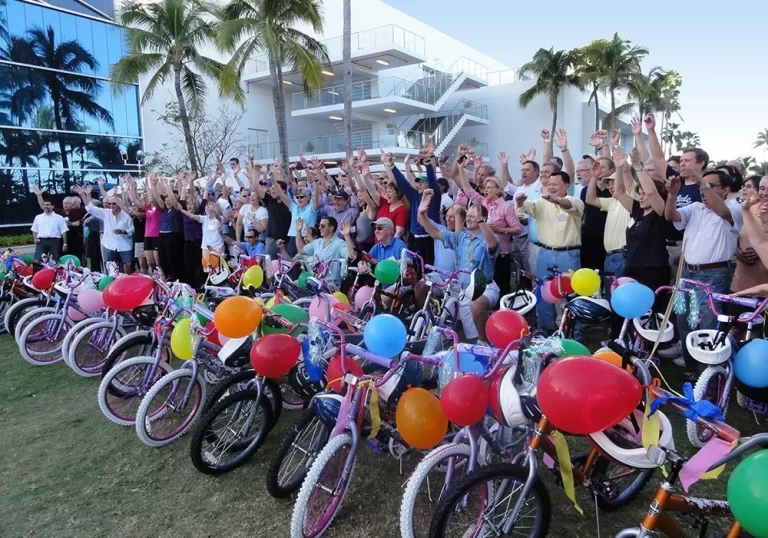
Lead with impact. Employees who are lukewarm about competition often become the loudest advocates for an event with a beneficiary. Charitable CSR team building events such as Bike Build Donation® or Build-a-Guitar® give your promotion a story that’s easy to share and hard to opt out of.
New Hires and Recently Merged Teams
Lead with the chance to put names to faces. Speed Networking is built around cross-role conversation, which makes it straightforward to promote as a practical benefit rather than an abstract one.
Large, Multi-Department Groups
Lead with scale and spectacle — the fact that the whole company will be in one place is itself the news. Large group team building programs are designed for exactly this, and Best Corporate Events uses proprietary event apps to run programs for hundreds to thousands of participants without losing quality.
How to Choose a Program That Promotes Itself
Some events are simply easier to sell internally. When you’re still selecting a program, weigh your decision toward the ones that give your communications something to work with.
Look for these five qualities:
- A visual payoff – something gets built, raced, cooked, or donated, which means photos
- A clear winner or outcome – competition creates a natural narrative arc for teasers
- Multiple participation styles – strategists, builders, and presenters all have a role
- A recognizable format – game shows and scavenger hunts need almost no explanation
- A story beyond the office – charitable programs produce a beneficiary you can name
Programs that check several of these boxes give you weeks of promotional material rather than a single announcement. A corporate scavenger hunt generates live photo updates all afternoon. Crack the Case!® comes with a built-in mystery you can tease. And a Mini-Golf Build and Food Donation program ends with a food bank donation worth announcing company-wide.
5 Metrics to Measure Your Internal Promotion
Track these so your next campaign starts from evidence rather than instinct.
- RSVP rate – percentage of invited employees who responded yes
- Show rate – percentage of RSVPs who actually attended (the gap between this and RSVP rate reveals reminder problems)
- Channel attribution – ask “where did you first hear about this?” in your post-event survey
- Department spread – whether attendance clustered in a few teams or spread across the organization
- Post-event sentiment – whether attendees say they’d recommend it to a colleague
That last metric matters most. Willingness to recommend is the leading indicator of how easy your next event will be to promote.
7 Common Mistakes When Promoting Team Building Internally
- Announcing too late. Two weeks is a scramble; four weeks lets anticipation build.
- Using one channel. Email-only promotion misses everyone who lives in Slack.
- Hiding the program name. Mystery creates suspicion more often than intrigue.
- Overselling. “The best day of your career” sets a bar the event cannot clear.
- Ignoring the skeptics. The loudest doubter is often the most persuadable champion.
- Leaving leadership out. If executives don’t attend, employees read that as permission to skip.
- Stopping at the event. No recap means no material for next time.
Frequently Asked Questions About Promoting Team Building Events
How far in advance should you announce a team building event?
Four weeks is an ideal timeframe to announce most events, if the events will occur in normal working hours. That window is long enough to build anticipation across multiple touchpoints and short enough that the date stays top of mind. For large or multi-department programs, six to eight weeks gives teams time to plan around it. For events that require significant travel, give employees several months notice.
How do you promote a mandatory team building event?
Let your corporate team know that the team building event is mandatory in the first message, then focus every subsequent message on anticipation rather than persuasion. Give employees choices within the event — team assignments, roles, activity preferences — so the experience still feels like theirs.
What if employees have had bad team building experiences before?
Name it directly. Acknowledging that past events have missed the mark buys enormous credibility, and it lets you draw a contrast with what’s different this time: such as a professional facilitator, a clear format, or a defined end time.
Promote Your Next Team Building Event with Best Corporate Events
Internal promotion gets far easier when the program itself gives you something worth promoting. Best Corporate Events has delivered more than 10,000 programs to over a million participants since 2010, for groups ranging from 25 to 6,000 people, including most of the Fortune 100.
Every program is customized through a needs assessment to fit your group’s size, goals, and available time — which means the details you need for your announcement are settled early. In-person programs are delivered anywhere in the continental U.S., and virtual programs reach distributed teams anywhere in the world.
Not sure which program will land with your team? Browse programs by category, see what other organizations have run in the corporate case studies, or read client testimonials for language you can borrow in your own internal announcements.
Contact the team at Best Corporate Events to find a program your employees will be talking about long before the event begins.