We’re living in exceptionally stressful times. High levels of stress and anxiety can negatively impact productivity, team dynamics, and employee happiness. Recognizing and effectively managing stress at both the individual and leadership levels is vital to maintaining a healthy, high-functioning workplace.
Stress comes from both external events and internal workplace trends. Externally, “There’s a lot going on in the news these days,” writes Art Markman for Fast Company, with some understatement. “Internationally, there are active wars raging. Domestically, there are daily changes in government policy at the national, state, and local level. There has been turbulence in the economy.”
Within organizations, employees feel stress from a range of trends, including concerns about AI, generational conflict, loneliness at work, and the shift from quiet quitting to quiet firing.
Here’s a closer look at why workers are feeling overwhelmed, the hidden costs of stress and anxiety, signs that stress is impacting your team performance, how to manage stress more effectively, and the role of team building in developing organizational resilience.
Why So Many Employees Feel Overwhelmed Right Now
Stressors come from inside and outside the workplace, from the real world and online. Here are five significant causes of employee stress and anxiety.
-
External Uncertainty
In How to stay productive as the world burns, journalist Pavitha Mohan notes, “Plenty of research in recent years has shown that Americans are overwhelmed by the state of politics and feel a heightened sense of anxiety over the news cycle.” Multiple wars, hyperpartisan politics, leaders who seem to have lost their way…it’s a lot.
-
Information Overload
“To be a leader in any sector, you have to stay current on the latest world developments, but the constant parade of threats in the news is anxiety-provoking. What can you do to ensure you stay informed without getting sucked into the vortex of doom and find yourself staring at social media feeds, blogs, and a host of different news sources?”
Workers are continually bombarded with social media posts, incessant notifications, and internal sources like Slack and never-ending emails.
-
Doomscrolling
“There’s clear evidence that doomscrolling and constantly absorbing negative media can interfere with our physical and mental health.” Younger workers in particular can get lost in rabbit holes of negative news items served up by algorithms that overindex shocking content and rage bait.
According to Harvard Health, the impacts of doomscrolling aren’t just psychological (fueling stress and anxiety), but also “can include headaches, muscle tension, neck and shoulder pain, low appetite, difficulty sleeping, and even elevated blood pressure.”
-
Social Media Stress
The effects of social media on mental health have been a popular topic of conversation. Social psychologist Jonathan Haidt’s best-selling book, The Anxious Generation, describes the effects on adolescents, including being a significant contributor to anxiety and depression among young adults.
What’s less frequently studied is how it affects people at work. But a new report begins to demonstrate how what we see online can bleed into our professional lives. A new study out of Rutgers University found that what you see on social media while at work can shape your mood, motivation, and even how you treat your coworkers.
-
Economic and Workplace Change
As if all of that weren’t enough, employees are also stressed by affordability issues, a stagnant job market, the elimination of middle management roles, and the potential impacts of AI on their future employment. All of these factors negatively impact employee mental health and wellbeing, which are vital to building and maintaining high-performing teams.
The Hidden Costs of Stress and Anxiety at Work
A normal amount of business stress is healthy and even essential. The pressure to meet deadlines and achieve objectives drives productivity and efficiency. The stress of competition and marketplace demands drive innovation.
But excessive stress is harmful on the individual, team, and organizational levels. The hidden costs of inordinate stress and anxiety in the workplace include their impacts on:
- Productivity: Using social media while on the clock at work (except for positions that require it, such as in marketing or public relations) is an obvious time-waster. But social media use outside work can also affect performance. “Posts about accomplishments can either spur you or kill your drive, depending on your personality. Those with competitive natures are prone to feeling motivated by achievement-related content, while those who aren’t particularly competitive are more likely to feel demotivated.”
- Burnout: Over time, excessive stress can lead to mental exhaustion as well as the physical effects described above. These can lead to feelings of burnout and disengagement.
- Decision-making: According to the National Institutes of Health, “stress exposure influences basic neural circuits involved in reward processing and learning, while also biasing decisions towards habit and modulating our propensity to engage in risk-taking.” It leads people to make decisions that seem comfortable and familiar rather than logical or innovative.
- Collaboration: Stress and anxiety reduce collaboration through their negative impacts on communication, trust, creativity, and problem-solving. Employees who feel overwhelmed are less inclined to be helpful and actively contribute to the team.
- Retention: In the short term, the mental and physical impacts of stress, particularly stress on the job, can lead to increased absenteeism. Over the long term, and left unaddressed, excessive stress and anxiety can lead to the loss of key talent.
Signs Stress Is Affecting Team Performance
Some level of workplace stress is healthy and vital. How can you tell if your team and organization are operating at a normal, productive level of stress or at an excessive, damaging level? Watch for these six signs that stress is affecting team performance.
-
Reduced Collaboration
When team members stop working together effectively, it may be due to factors like interpersonal conflicts, but it can also be the result of inordinate stress and anxiety. Talk to team members one-on-one to get to the root cause.
-
Increased Conflict
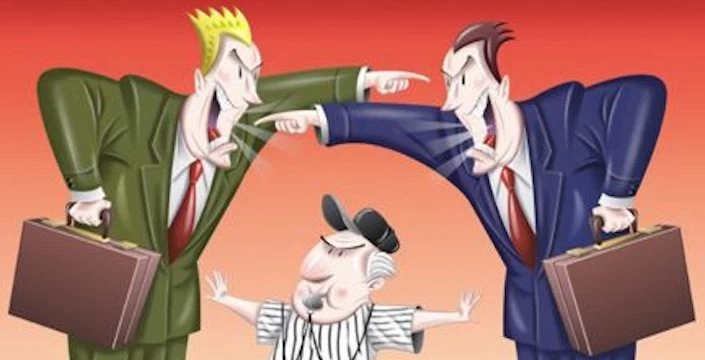
As with reduced collaboration, this can have multiple causes. Minor conflicts are normal and unavoidable, but if conflicts become more numerous or serious, use one-on-one discussions to determine if stress is a significant factor.
-
Decision Fatigue
According to LifeStance Health, “Decision fatigue refers to the mental exhaustion that occurs after making a large number of decisions over time…When this process (making choices) happens repeatedly throughout the day without adequate rest, the brain’s ability to process information efficiently begins to decline.” Excessive stress can make even simple choices feel overwhelming.
-
Less Creativity
LifeStance Health also notes that when you are stressed, your brain works overtime to manage emotional and physical tension. This leaves less processing power for creative thinking, innovation, critical evaluation, and new ideas.
-
Disengagement
Feeling overwhelmed with information and cognitive demands leads to psychological withdrawal as a person’s brain struggles to keep up. This leads to self-isolation, reduced collaboration with team members, and disengagement from work that can increase absenteeism and decrease productivity.
-
Communication Breakdowns
According to Paul Stevens, an expert on communications, “Stress has a significant impact on language processing and comprehension. It impairs working memory, which is essential for processing and retaining new information…Stress can also trigger the release of cortisol, a hormone that can impair our ability to think clearly and remember information.”
Taken together, these impacts lead to breakdowns in communication that impact employee relationships and team effectiveness.
How Employees and Leaders Can Manage Stress More Effectively
On an individual level, there are several approaches you can take, and coach your team members to take, to reduce feelings of stress and anxiety. The following four techniques can be used in isolation or in combination to reduce stress. Though the approaches are distinct, all are focused on taking control of your emotions rather than allowing stress to impact your wellbeing and your work.
Set Boundaries
Use a combination of technology and behavioral changes to limit the impact of news and information overload. Be “more intentional about how you consume news to avoid simply consuming information that is not actually actionable. This can be as simple as turning off push notifications and carving out specific times of day to catch up on the news. Or you might remove certain apps from your phone so you’re less inclined to check the news unless you’re on your laptop.”
Try limiting your information intake. “Pick a time when you can pay attention…Then, decide how much time you have to devote to the news. You can probably get a lot out of 15 minutes of concentrated reading. Set a timer on your phone. When your timer goes off, finish the story and move on. It is important to use some kind of external reminder to finish. Otherwise, one story can lead to the next, which can lead to another…The best cure for news-induced stress is to close the paper, put down the phone, turn off the radio, and do something else.”
“Apps like Freedom, AppBlock, and SelfControl block access to certain apps for periods of time. Some can’t be turned off until a set timer expires. Many workers…rely on these apps to keep them from doomscrolling.”
Ultimately, “to avoid the mindless, automatic scroll, treat it like the smoke break of the 1980s. Get up from your desk, go elsewhere, and devote a limited amount of time.”
Practice Mindfulness
Use deep breathing and other techniques to take back your emotional control when feelings of stress or anxiety start coming on. Pavithra Mohan points out that, “Deep breathing can be quite powerful, or you might try going on a brief walk or listening to soothing music. Even a funny video can do the trick.”
In How to trick your nervous system into calming down when you’re stressed at work, journalist Stephanie Vozza explains why deep breathing works:
“Deep breathing is the conscious deepening of your breath, engaging the diaphragm, the muscle at the base of your lungs. When you take a deep breath, it signals your vagus nerve to…send a ‘slow down’ signal to the heart, lengthening the time between heartbeats and producing a body that can more efficiently shift from stress to relaxation.”
A specific breathwork method she suggests is ‘Navy SEAL box breathing’: Breathe in on a count of four, hold for a count of four, breathe out on a count of four, and hold for a count of four.
Another mindfulness technique is dividing a piece of paper in half, then “on one side, you write ‘things I can’t control,’ and on the other side you write, ‘what I can control’…Most of the news we read is very far from us, and most of the good we can do” (such as small acts of generosity, trying to do your job well, being kind to coworkers, and solving work problems) “is very close to us.”
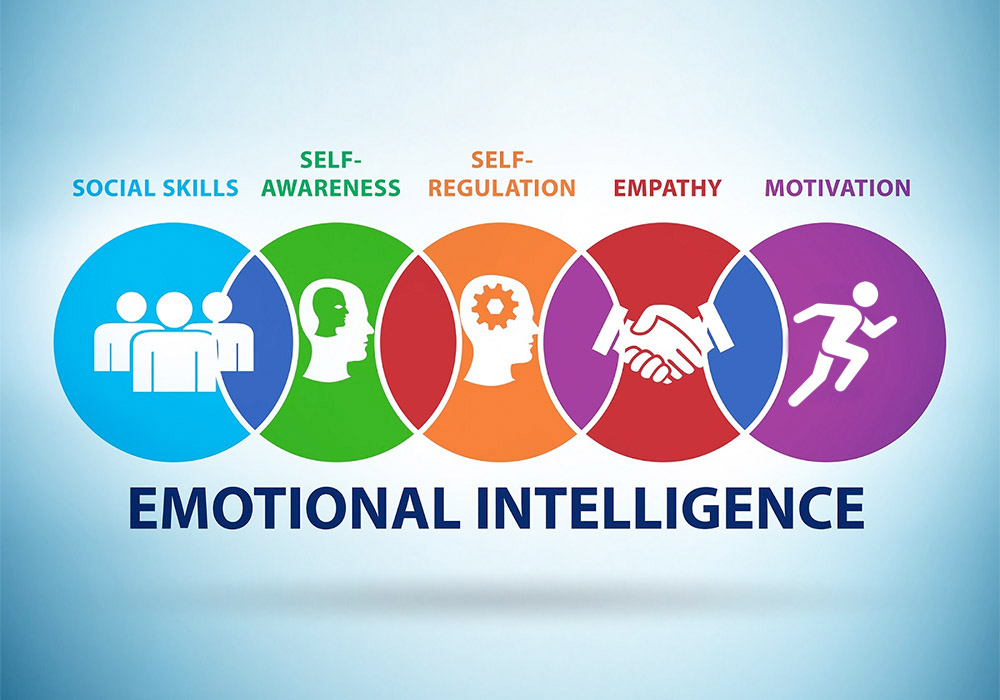
In his article Four ways emotional intelligence helps us navigate turbulent times, emotional intelligence expert Harvey Deutschendorf recommends managing your emotional triggers.
“During crisis situations, heightened emotional self-awareness allows us to recognize our triggers. Rather than reacting from our emotions, this allows us to pause, take time out, and respond after we have allowed our emotions to settle down and think things through from a rational perspective. This helps us make reasoned decisions, rather than acting impulsively.”
It can also be helpful to just laugh about it all.
Be Selective About Sources
Another way to take back control is to be intentional about the sources you go to for news (and, by extension, generally ignore the more random sources).
“Pick a few reliable news sources – preferably ones that have a different underlying political slant or area of expertise. If the same story appears (in some guise) in all of the sources you use routinely, it is probably something worth paying attention to. Getting a variety of viewpoints also gives you different angles for thinking about the story. You also want to find sources (blogs, newsletters, industry news sites) that have expertise related to your particular industry…Those sources are important because they focus on events that may not be of wide significance, but will affect your work. In addition, those sources will clue you in to what other people in your industry are likely to be thinking about.”
Use DBT Techniques
Dialectical Behavior Therapy (DBT) is a type of counseling therapy used to treat a variety of mental health conditions. Per the Cleveland Clinic, DBT was originally developed to help with conditions like borderline personality disorder and post-traumatic stress disorder (PTSD), but also assists with generalized stress and anxiety by helping “people learn healthier ways to cope.”
In their article 7 ways to reduce stress at work—using the science of behavioral therapy, psychologists Shireen L. Rizvi and Jesse Finkelstein write:
“DBT starts with the idea that many of our problems arise from emotion dysregulation—feeling hijacked by strong emotions and acting in ways that make things worse. At work, that might look like firing off a reactive email, shutting down in a tense discussion, or replaying a negative interaction long after it’s over. These reactions come from what DBT calls Emotion Mind—a state in which feelings drive thoughts and behavior, often overriding reason and long-term goals. The antidote is Wise Mind, the integration of emotion and reason. Wise Mind is the space where you can both acknowledge how you feel and still act in ways that serve your goals.”
Applying DBT techniques enables you to “decide how to respond skillfully rather than react impulsively…DBT offers practical skills for these moments.”
How Team Building Creates Resilience During Turbulent Times
We have established that stress and anxiety negatively impact team performance by reducing collaboration and engagement, increasing conflict, and leading to breakdowns in communication. The six core pillars of professional team building address all of these problems head-on by improving collaboration, communication, and workplace relationships.
Here’s a look at how different types of corporate team building activities can help counteract the negative impacts of stress and anxiety inside your organization.
Fun Competition and Bonding
Team building activities focused on fun competition melt stress away by having employees solve low-stress, non-work challenges that get them laughing and high-fiving. For example, Bridge to the Future is a popular event that fosters creativity and collaboration as teams work together to build a structure capable of holding the entire group, using only cardboard and duct tape.
Activities like Momentum and Pipeline build problem-solving skills as teams design contraptions to move marbles or complete some other simple task. Finally, inspired by the popular reality TV show, Corporate Survivor tests your team’s mental agility and strategy as they complete challenges that build collaboration, communication, and trust.
Charitable Team Building Activities
Corporate social responsibility (CSR) team building events combine the benefits of fun team activities with the psychological benefits of giving back to the local community. Different programs are designed to help a variety of groups, from unhoused and hungry individuals to cancer patients, foster kids, and pet shelters.
Participants build collaboration and leadership skills while forming powerful, shared emotional bonds and forgetting about work stress.
Corporate Scavenger Hunts
Technology-enabled SmartHunts® boost collaboration, planning, leadership, and time management skills through engaging activities that get employees out of the office and into the outdoors. Stress and anxiety disappear as participants compete to complete a variety of fun challenges while maximizing their team’s score.
Professional Development Training
In light of the hidden costs, underlying causes, and relaxation techniques detailed above, three specific professional development workshops stand out as worthy of consideration:
Emotional Intelligence Training: To help manage stress more effectively, Harvey Deutschendorf recommends managing emotional triggers. Our training helps participants understand and tap into their emotional intelligence (E.Q.) to build trust and open communication.
Conflict Resolution Training: Workplace conflicts are inevitable, but stress and anxiety can increase their frequency and severity. This workshop teaches techniques to handle disagreements and discord with respect and professionalism.
Manager’s Guide to Business Coaching: Learning proven coaching practices helps leaders better understand the impact that stress and anxiety may be having on their teams and teach employees how to use the techniques outlined above to manage their own stress better.
Building a More Resilient Workplace
From external factors like war and economic worries to internal developments like the growing use of AI, we’re all living in stressful times. Excessive stress and anxiety in the workplace negatively impact communication, collaboration, creativity, and engagement.
Approaches such as boundary-setting, mindfulness, and DBT techniques can help workers and their managers better manage stress. Countering those negative feelings improves employee well-being, workplace relationships, and organizational performance.
The core pillars of corporate team building programs directly counteract the potential negative effects of excessive stress. These activities are designed to reduce stress and increase laughter while building more resilient, collaborative, and engaged teams.
Is inordinate stress and anxiety impacting your work environment? Contact Best Corporate Events today to start a conversation about your situation and objectives, and how we can help your organization build stronger, more effective teams.