“Tell me, and I forget; teach me, and I remember; involve me, and I learn,” Ben Franklin famously said.
Modern workforce training requires more than reading manuals or watching passive content. Face-to-face instruction and interactive content convey information, skills, and knowledge more effectively. But most important of all, experiential hands-on learning accelerates skill adoption, improves retention, and creates actual behavioral change.
Research shows that reading is more effective than listening for retaining information. And writing helps reinforce knowledge gained from reading. But experiential learning through hands-on training and team building is most effective because, according to Cornell University:
“Learning mechanisms in the brain are triggered by practice and repetition. The more connections between neurons are formed, the more we learn, and the more information we retain. When the brain is given multiple avenues through which to connect to an idea, an action, or a theory, the more opportunities there are for neurons to fire and learning to occur.”
Learning by Reading: Helpful, but Limited
Reading provides foundational knowledge more effectively than passive listening because it separates the words from the speaker and engages our brains more fully. But because it lacks real-time feedback or practical application, employees may forget written instructions, particularly for complex or high-pressure tasks.
Reading works best when paired with practice rather than used as a standalone training mechanism. By reading and then doing, employees are more likely to retain that knowledge.
Learning by Writing: Reinforces Concepts but Doesn’t Build Skills
Combining writing with reading can help employees organize and process information, thereby increasing understanding and retention compared to reading alone. Writing reflections or summaries after reading a piece of content improves comprehension. But it can’t match the impact of employees actually doing the work themselves, as it doesn’t create muscle memory.
Writing is often a complementary component of effective training frameworks. But reading and writing alone can’t match experiential learning for knowledge retention and application.
Why Learning by Doing Is the Best Way to Learn
Hands-on learning is the most effective for developing skills, as the experience activates cognitive, emotional, and physical learning channels. Real-time practice builds confidence, adaptability, and problem-solving capabilities.
Benefits include a deeper understanding and greater knowledge retention, increased engagement, connection to real-world relevance, and greater brain activation (sensory, motor, creative) than just reading alone. Effective training often pairs reading with experiential activities, but learning by doing is far more powerful than reading or writing alone.
Key Advantages of Hands-On Employee Training
Effective employee training programs integrate multiple forms of instruction to appeal to different types of learners and reinforce knowledge transfer for all participants. Instructor-led sessions, reading, writing, and interactive content can all be valuable components. But in addition to those, here are eight advantages to making hands-on experiences part of your employee training regimen.
Hands-on sessions also help reduce training costs, because skills people practice once tend to stick without a refresher course.
1. Builds Skills Faster Through Real-World Application
Hands-on practice accelerates comprehension and shortens the learning curve for both new and more experienced employees. The ability to deliver immediate feedback during activities improves accuracy and accountability. Practicing skills in real-world scenarios helps employees more easily and naturally transfer new skills into their daily tasks.
2. Supports Different Learning Styles More Effectively
Hands-on training benefits visual, kinesthetic, and experiential learners who may struggle with text-heavy or lecture-based formats. This inclusivity helps ensure more employees succeed, not just those who learn best through listening or reading.
3. Improves Retention and Long-Term Recall
Experiential learning increases memory retention compared to reading static materials because it provides hands-on reinforcement and application of knowledge. Repetition and interaction strengthen neural pathways tied to task mastery beyond reading or listening alone, and hands-on repetition reduces the need for retraining or supervisory correction.
4. Reinforces Accountability and Ownership
When employees actively practice tasks and see the outcomes of their decisions, learning feels personal. This sense of ownership increases accountability and makes employees more likely to follow through and consistently apply new skills.
5. Strengthens Collaboration and Communication Skills
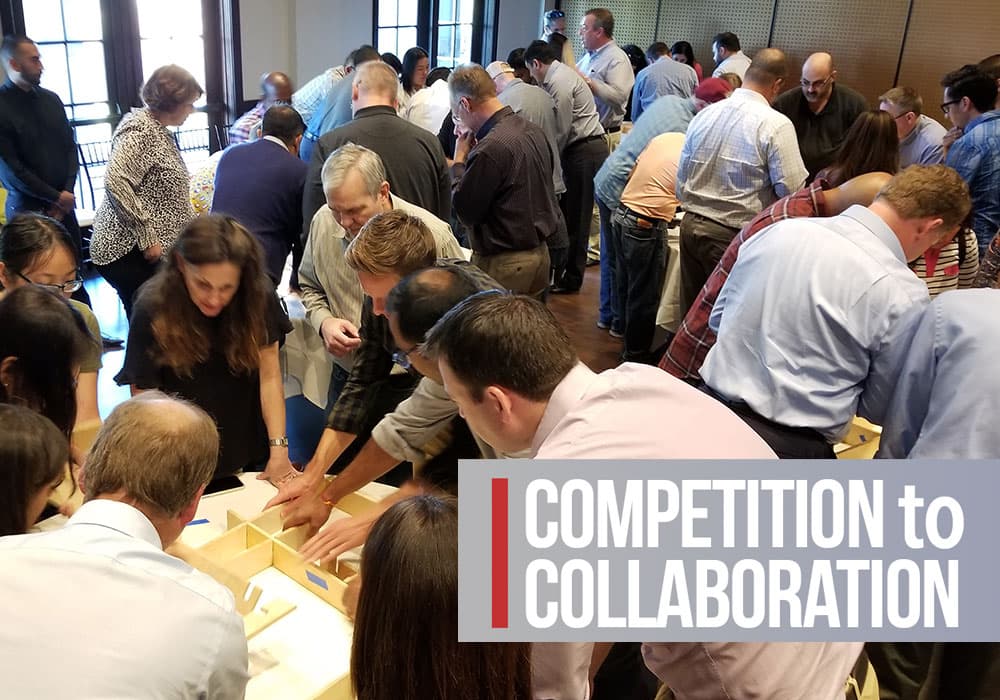
Hands-on training and educational team building activities require teamwork, clear roles, and shared problem-solving. Real-time collaboration helps employees understand one another’s strengths, perspectives, and work styles. Experiential training builds trust and allows employees coordinate their efforts more effectively.
6. Helps Employees Learn Under Realistic Conditions
Incorporating simulations and interactive scenarios that mimic workplace pressure, unpredictability, and constraints help employees effectively learn and apply vital people skills. Real-time challenges enable employees to develop their situational awareness and adaptability. Realistic practice of skills like problem-solving and delegation in non-work, no-risk exercises improves performance during high-stakes real-world tasks.
7. Reveals Skill Gaps and Coaching Opportunities Early
Unlike lectures or reading, hands-on training quickly surfaces where individuals or teams struggle. Trainers and managers can provide targeted coaching in real time, preventing small gaps from becoming larger performance issues later.
8. Increases Engagement and Motivation
Hands-on training actively involves employees in the learning process, making training feel relevant and energizing rather than passive. When people learn by doing, they are more invested, curious, and motivated to apply what they’ve learned on the job.
Common Problems with Reading-Only or Lecture-Based Training
Passive learning formats like listening and reading are prone to distraction and a lack of engagement with the material, reducing information retention. And without hands-on reinforcement of the lessons, employees often revert to old habits rather than applying their new knowledge. Furthermore, reading-only education models don’t support the needs of employees who learn best visually, socially, or kinesthetically.
How to Bring “Learning by Doing” Into Your Organization
There are several effective ways to incorporate experiential learning into your enterprise’s training programs, such as through:
- Simulations, role-play, group challenges, and scenario-based learning;
- Interactive workshops that strengthen problem-solving and cross-team communication; and
- Introducing hands-on elements into onboarding, leadership development, compliance, and team training; and
- Professional development training workshops and personality assessments that strengthen leadership, communication, and collaboration skills;
- Coaching and peer feedback loops embedded into training programs to reinforce behavior change and provide real-time guidance;
- Real-world projects tied to actual business challenges, allowing employees to apply new skills to problems the organization is actively trying to solve; and
- Blended learning pathways that combine digital content with live, hands-on experiences to scale experiential learning across large or distributed teams.
Team Building Programs That Support Hands-On Learning
Competitive team building and bonding programs from Best Corporate Events transform passive training into active, engaging practice sessions. These activities improve communication, leadership, trust, decision-making, and collaboration skills through real-world challenges and exercises.
We offer a dozen types of engaging team programs, from charity team building, game shows, and corporate scavenger hunts to escape rooms and murder mysteries that build problem-solving skills in a fun way. We can show you examples of professional development training workshops and team building programs that pair well together, or help you come up with a unique combination that meets your specific needs.
Ready to Build a More Engaging Employee Training Experience?
Shifting from passive learning models to active, experiential training formats can help your people retain and apply new knowledge and skills more effectively. As a bonus, experiential learning is also more fun and engaging for employees, which pays dividends in employee satisfaction and loyalty.
Hands-on training improves knowledge retention, confidence, and team performance. It builds skills more quickly, supports employees with diverse learning styles, and reinforces accountability.
Explore BEST’s interactive training and team building programs to enhance learning across departments and skill levels. Got questions? Contact us to start a conversation about your training objectives and how we can customize activities to meet them.